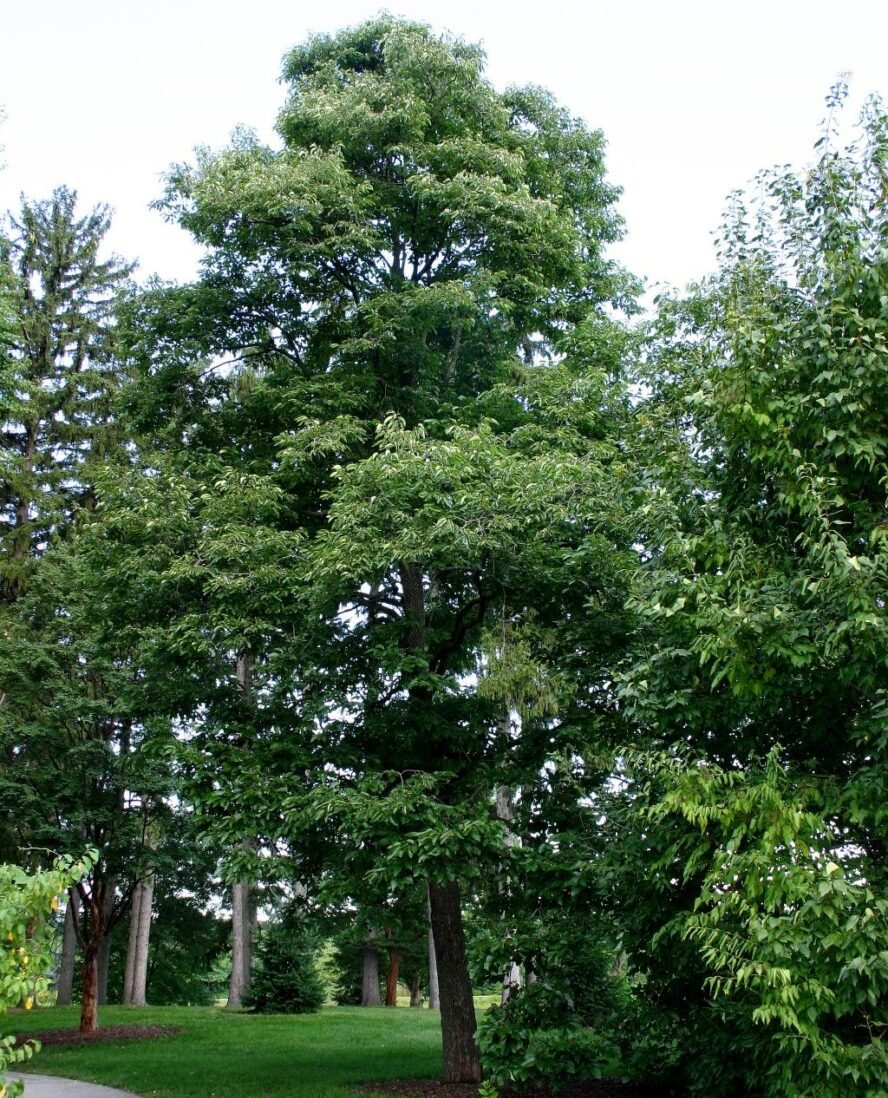
Root and Canopy The Premier Network for Holisic Homesteaders Your Voice Matters! Comment, discuss, and be part of the dialogue. Vote Now Home / Field Guide, Tree ,Deciduous, Native, Perennial Tree Facts Foliage Persistence: Deciduous Sexual Expression: Dioecious Lifespan: Typically 60–80 years; some individuals over 100 years [Halls, 1990] Growth Rate: Moderate Life Cycle: Perennial Pollination: Insect Pollinated (Mainly Bees) Bloom Period: Late Spring Uses & Toxicity: Practical Uses: Fruit for food, preserves, and baked goods; wood for golf clubs, tool handles, and flooring due to hardness [Briand, 2005]. Medicinal Uses: Bark and unripe fruit historically used as astringent and antiseptic; leaves studied for antioxidant properties [Grygorieva & Motuleva, 2017]. Toxicity: Unripe fruits can cause astringency and digestive upset due to tannins. History & Folklore: History/Folk Lore: Revered by Indigenous tribes like the Osage and Cherokee for sustenance; Kalm’s 18th-century writings praised its fruit and resilience [Briand, 2005]. Symbolism: Associated with transformation and patience (fruit sweetness only after frost). Similar Species & Look-a-likes: Similar Species: Asian persimmon (D. kaki), which bears larger, less astringent fruit. Lookalikes: Black gum (Nyssa sylvatica) foliage resembles young persimmon leaves but lacks distinctive bark pattern. Key References: Briand (2005) — Historical and ethnobotanical record. Halls (1990) — USDA silvics profile. Pomper et al. (2020) — Cytogenetic and breeding studies. Moody & Kindscher (2022) — Sustainable harvest and ecological role. Sastry et al. (2020) — Pathology and viral interactions. Taxonomy Kingdom: Plantae Subkingdom: Tracheobionta Superdivision: Spermatophyta Division: Magnoliophyta Class: Magnoliopsida (Dicotyledons) Subclass: Dilleniidae Order: Ebinales Family: Ebenaceae (Ebony) Genus: Diospyros L. Species: Diospyros virginiana Etymology: The genus name Diospyros derives from the Greek diós (“of Zeus” or “divine”) and pyrós (“grain” or “wheat”), loosely interpreted as “divine fruit” or “fruit of the gods.” The specific epithet virginiana refers to “Virginia,” one of the first recorded regions in North America where the tree was documented by early European naturalists (Halls, 1990; Briand, 2005). Other Common Names: Common Persimmon, Possumwood, Virginia Persimmon, Simmon tree Morphology and Structure Overall Shape: Oval to rounded crown; occasionally irregular in open-grown specimens Mature Height: 33 – 66 ft. (up to 98 ft. in optimal soils), 10–20 m (up to 30 m) Mature Spread: 30- 39 ft., 9–12 m Mature Trunk Diameter: Up to 2 ft., 60 cm Bark: Thick, dark-gray to black; deeply fissured into square “blocky” plates resembling alligator skin [Briand, 2005] Leaves: Simple, alternate, ovate to elliptic (6–15 cm long), glossy dark green above, paler below; turn yellow or reddish in fall. Buds: Small, conical, dark brown with overlapping scales. Twigs: Slender, gray-brown, often with orange inner bark when scraped. Flowers: Small, urn-shaped, cream to yellow-green; male flowers in clusters, female flowers solitary. Flower Size: 1- 2 in. ~1.5 cm diameter. Bloom Time: Late spring (May–June). Pollination: Insect-pollinated (mainly bees). Fruit: Berry-like fruit (technically a true berry). Astringent until soft-ripe due to tannins; sweet, pulpy texture at maturity [Jain et al., 2023]. Fruit Shape: Round to oblong, 2–5 cm diameter. Fruit Color: Green when unripe; orange to deep reddish-orange when ripe. Fruit Maturation: September–November (after frost). Management & Propagation Propagation: By seed (stratify 60–90 days at 4 °C), root suckers, or grafting for improved cultivars [Halls, 1990]. Pests/Diseases: Susceptible to persimmon wilt (Cephalosporium diospyri) and persimmon psylla; tolerant to most insect pests [Sastry et al., 2020]. Management: Low-maintenance; pruning mainly for form or fruit access. Ecology and Habitat Habitat: In forests, old fields, and slopes; tolerates drought and poor soils [Skallerup, 1953]. Soil Preference: Prefers well-drained sandy or loamy, slightly acidic to neutral soils. Water Requirements: Sun Requirements: Temperature Needs: Hardy to USDA Zone 4–9 – 13 to 95 °F (−25 to + 35 °C). Tolerances:Drought, periodic flooding, moderate salinity, and poor fertility. Establishment: Seedlings grow slowly at first; resprouting common after disturbance. Range: Eastern U.S. — from Connecticut and Kansas south to Florida and Texas [Halls, 1990]. Conservation Status: Least Concern (IUCN); populations stable [Burge, 2018]. Ecological Benefits: The Premier Network for The Holistic Homesteader Unlock Premium Content! Sign up for our premium membership today. Get It Now Top Posts All Posts Annual Arboriculture Botany Field Guide Flowering Grains Grass Herb Homestead Horticulture Lifestyle Mycology Perennial Shrub Tree Back Plant Biology Plant Identification Pedology Planting & Transplanting Pruning Plant Diagnostics Plant Treatment Tree Risk Assessment Safe Climbing & Rigging Forest Management Purple Passion Flower by Patrick L. Kimble-December 12, 2025Read More… Youpon Holly by Patrick L. Kimble-December 12, 2025Read More… Joseph’s Coat by Patrick L. Kimble-December 12, 2025Read More… Red Amaranth by Patrick L. Kimble-December 12, 2025Read More… Buckwheat by Patrick L. Kimble-December 12, 2025Read More… Newsletter Unlock Premium Content! Sign up for our premium membership today. Get It Now Field Guide Trees Shrubs Herbs Grasses Grains Flowering Categories Annuals Perrenials Herbs Grasses Grains New Page New Page Sub Title Tags New Page 1 First Sub Title New Page 2 Second Sub Title New Page 3 Third Sub Title Archive New Page 1 First Sub Title New Page 2 Second Sub Title New Page 3 Third Sub Title Free PDF New Page 1 First Sub Title New Page 2 Second Sub Title New Page 3 Third Sub Title Leave a Reply Cancel reply Logged in as Patrick L. Kimble. Edit your profile. Log out? Required fields are marked * Message*

Subscribe to our newsletter for the latest updates, exclusive stories, and expert insights delivered straight to your inbox. Join our community today!
Categories
- Homestead
- Native Roots
- Flowering
- Edible Fruits
- Medicinal
- Trees
- Shrubs
- Herbs
Quick Links
- User Agreement
- Content Guidelines
- Viewing Assistance
- Inclusion & Diversity
- Account Preferences
- Cookie Settings
- Join Our Community
- Company Overview
Contact Us
Consectetur adipiscing elit. Ut elit tellus, luctus nec ullamcorper mattis, pulvinar. tr
- 1910 Madison Ave. Ste.2478 Memphis, TN38104
- +1-(406) 215-5163
- info@etherealdigital.com