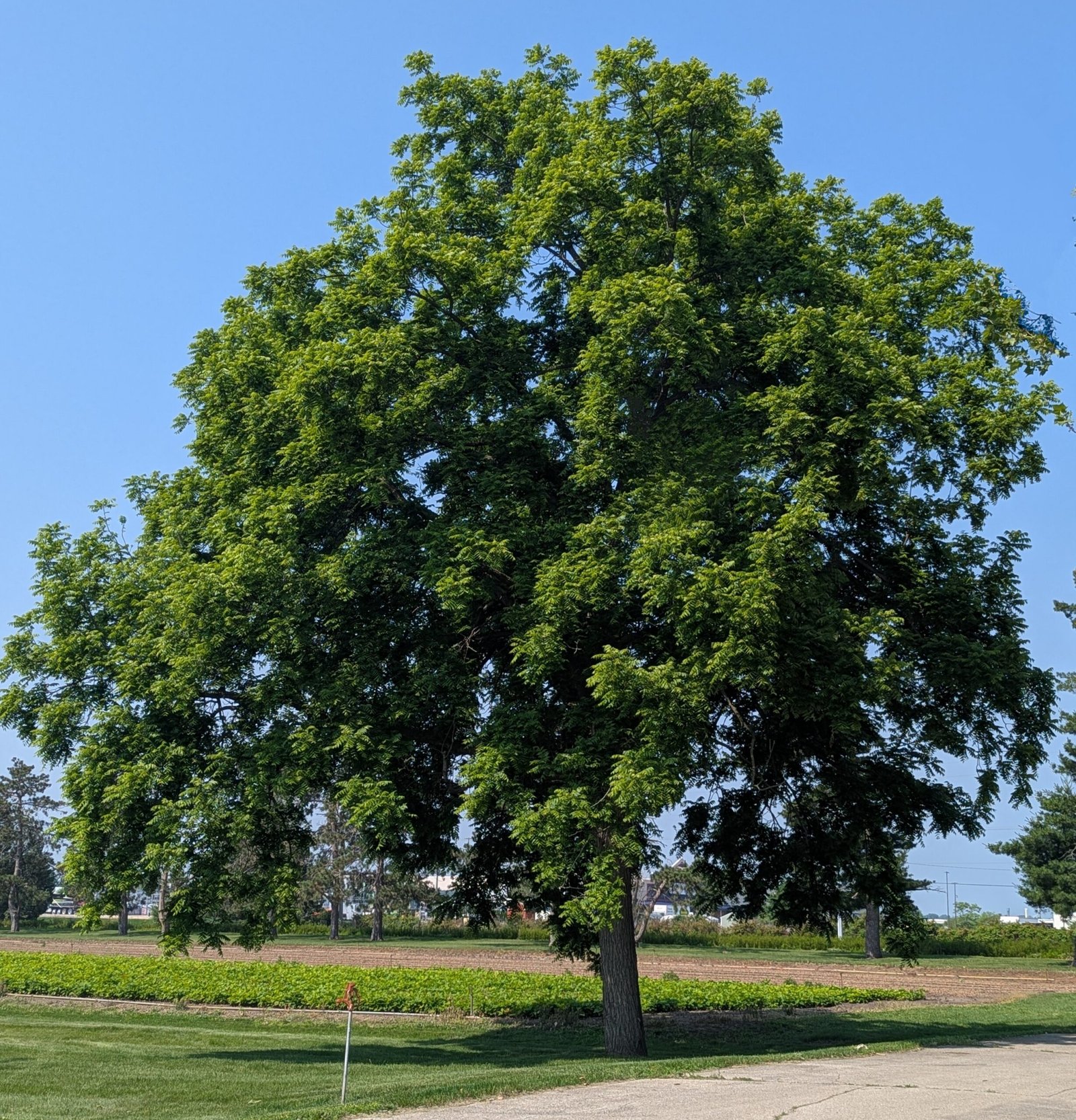
Root and Canopy The Premier Network for Holisic Homesteaders Your Voice Matters! Comment, discuss, and be part of the dialogue. Vote Now Home / Field Guide, Tree ,Deciduos, Food Source, Native Roots Tree Facts Foliage Persistence: Deciduous Sexual Expression: Monoecious (male and female flowers separate but on the same tree) Lifespan: 130–250 years (some individuals surpass 300 years) Growth Rate: Moderate to fast Life Cycle: Perennial Pollination: Wind-pollinated (anemophilous) Bloom Period: Late spring (April–June, depending on latitude) Uses & Toxicity Practical Uses: Highly valued for its dark, durable wood, used in fine furniture, gunstocks, veneers, and cabinetry; nuts edible, used in confectionery and baking. Medicinal Uses: Traditional Indigenous and early herbal remedies employed the husk and bark for anti-parasitic and antiseptic properties; juglone investigated for potential antimicrobial and anticancer effects (Hejl & Koster, 2004). Toxicity: Releases juglone (5-hydroxy-1,4-naphthoquinone), an allelopathic compound toxic to many nearby plants (especially solanaceous crops). Green husks can stain skin and clothing; non-toxic to humans in nut form. History & Folklore Historical Notes: Used by Indigenous peoples for food and dye; prized by early settlers for durable lumber and nut oil. The black walnut became symbolic of American craftsmanship and endurance. Symbolism: Represents wisdom, foresight, and hidden strength—nuts difficult to open but rich inside. Cultural Notes: Cherokee and Iroquois used nut hulls for dyes; Appalachian folklore considered black walnut wood protective against lightning. Similar Species & Lookalikes Butternut (Juglans cinerea) — lighter bark, sticky nuts, and oblong fruit. English Walnut (Juglans regia) — thinner-shelled nut, smoother bark, non-native. Key References Rink, G. & Williams, R.D. (1984). Juglans nigra L. — Black Walnut. In R.M. Burns & B.H. Honkala (Eds.), Silvics of North America: Volume 2. Hardwoods. USDA Forest Service. Hejl, A.M. & Koster, K.L. (2004). Juglone disrupts root plasma membrane H⁺-ATPase and water uptake. Plant Physiology, 136(3), 108–117. Woeste, K.E. (2002). Genetic diversity and management of black walnut. Forest Ecology and Management, 166(1–3), 41–54. Myers, M.D. & Rink, G. (1984). Ecological relationships of black walnut. Northern Journal of Applied Forestry, 1(1), 14–17. Ostry, M.E. et al. (2013). Thousand cankers disease of black walnut: History, biology, and management. Plant Health Progress. Taxonomy Kingdom: Plantae Subkingdom: Tracheobionta Superdivision: Spermatophyta Division: Magnoliophyta Class: Magnoliopsida (Dicotyledons) Subclass: Hamamelidae Order: Juglandales Family: Juglandaceae Genus: Juglans L. Species: Juglans nigra L. Etymology: The genus name Juglans derives from the Latin Jovis glans (“nut of Jupiter”), meaning “nut fit for the gods.” The species epithet nigra refers to the tree’s dark-colored bark and nut shell. Common Names: Black Walnut, Eastern Black Walnut, American Walnut Morphology and Structure Overall Shape: Broadly rounded to open, symmetrical crown; straight trunk with clear bole in forest-grown individuals Mature Height: 75–130 ft (23–40 m) Mature Spread: 50–75 ft (15–23 m) Trunk Diameter: 2–4 ft (60–120 cm) Bark: Dark brown to black; deeply furrowed into interlacing ridges forming a diamond pattern. Leaves: Alternate, pinnately compound (12–24 in / 30–60 cm long) with 15–23 lanceolate leaflets (6–12 cm each); finely serrate margins; aromatic when crushed; yellow in fall. Buds: Large, tan, downy; terminal bud broad and blunt; lateral buds smaller, appressed. Twigs: Stout, light brown; chambered pith; leaf scars with three distinct bundle scars forming a “monkey face” pattern. Flowers: Male (staminate) flowers in pendulous catkins (8–12 cm); female (pistillate) flowers small, green, terminal clusters of 2–5. Fruit (Nut): Globose drupe with thick green husk enclosing a hard, deeply furrowed black nut; kernel oily and edible. Fruit Size: 3.5–5 cm diameter Fruit Maturation: September–October Management & Propagation Propagation: By seed (requires cold stratification 90–120 days at 1–4°C); also propagated by grafting for improved nut cultivars. Pests/Diseases: Affected by thousand cankers disease (caused by Geosmithia morbida vectored by Pityophthorus juglandis), walnut anthracnose (Ophiognomonia leptostyla), and tent caterpillars; generally resistant to most borers and insects. Management: Requires deep, fertile, well-drained soils for optimal growth; pruning for form; avoid planting near gardens due to allelopathy. Ecology and Habitat Habitat: Rich bottomlands, slopes, and upland hardwood forests; thrives in deep, moist alluvial soils. Soil Preference: Deep, fertile, loamy, well-drained soils; pH 6.0–7.5 preferred. Water Requirements: Moderate; intolerant of prolonged flooding or standing water. Sun Requirements: Full sun to light shade. Temperature Needs: Hardy to USDA Zones 4–9 (−25 to +35 °C). Tolerances: Moderately drought-tolerant; intolerant of compacted or poorly drained soils. Establishment: Seedlings slow-growing at first; deep taproot; competitive dominance established in open areas. Range: Native to eastern and central North America — from Massachusetts and Minnesota south to Florida and Texas. Conservation Status: Least Concern (IUCN); populations locally impacted by disease spread. Ecological Benefits Nut production provides essential mast for squirrels, woodpeckers, and small mammals. Juglone release shapes local plant communities by suppressing competitors (natural allelopathic control). Deep root systems enhance soil stability and nutrient cycling. Supports specialist insect fauna, including several Datana moths and Cydia weevils. Promotes wildlife caching behavior, aiding seed dispersal and forest regeneration. The Premier Network for The Holistic Homesteader Unlock Premium Content! Sign up for our premium membership today. Get It Now Top Posts All Posts Annual Arboriculture Field Guide Flowering Grains Homestead Horticulture Lifestyle Mycology Perennial Tree Back Plant Biology Plant Identification Pedology Planting & Transplanting Pruning Plant Diagnostics Plant Treatment Tree Risk Assessment Safe Climbing & Rigging Forest Management Back Herb Shrub Grass Little Bluestem (Schizachyrium scoparium) by Patrick L. Kimble-December 10, 2025Read More… Forest Resource Inventory & Data Collection Methodologies by Patrick L. Kimble-December 10, 2025Read More… Rosemary by Patrick L. Kimble-November 27, 2025Read More… Better Understanding Your Soils Nutriet Cycle: The Key to Healthier Plants by Patrick L. Kimble-November 27, 2025Read More… American Plum by Patrick L. Kimble-November 27, 2025Read More… Newsletter Unlock Premium Content! Sign up for our premium membership today. Get It Now Field Guide Trees Shrubs Herbs Grasses Grains Flowering Categories Annuals Perrenials Herbs Grasses Grains New Page New Page Sub Title Tags New Page 1 First Sub Title New Page 2 Second Sub Title New Page 3 Third Sub Title Archive New Page 1 First Sub Title New Page 2 Second Sub Title New Page 3 Third Sub Title Free

Subscribe to our newsletter for the latest updates, exclusive stories, and expert insights delivered straight to your inbox. Join our community today!
Categories
- Homestead
- Native Roots
- Flowering
- Edible Fruits
- Medicinal
- Trees
- Shrubs
- Herbs
Quick Links
- User Agreement
- Content Guidelines
- Viewing Assistance
- Inclusion & Diversity
- Account Preferences
- Cookie Settings
- Join Our Community
- Company Overview
Contact Us
Consectetur adipiscing elit. Ut elit tellus, luctus nec ullamcorper mattis, pulvinar. tr
- 1910 Madison Ave. Ste.2478 Memphis, TN38104
- +1-(406) 215-5163
- info@etherealdigital.com