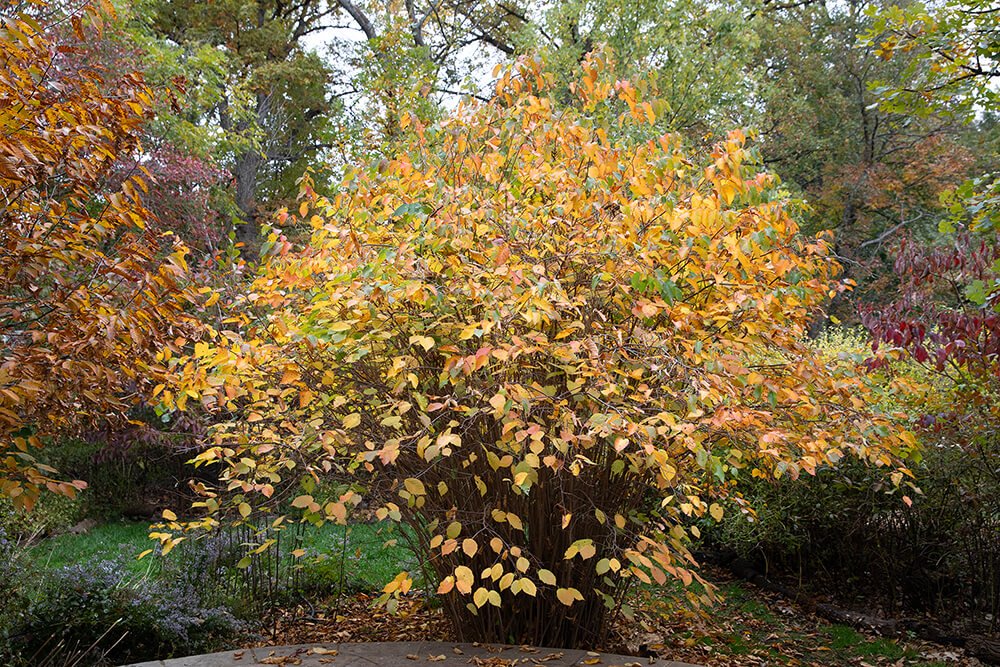
Root and Canopy The Premier Network for Holisic Homesteaders Your Voice Matters! Comment, discuss, and be part of the dialogue. Vote Now Home / Field Guide, Shrub ,Food Source, Native, Perennial Tree FactsFoliage Persistence: Deciduous Sexual Expression: Monoecious (male and female flowers on the same plant) Lifespan: Typically 40–60 years; colonies can persist longer through root suckering [Dirr, 2009] Growth Rate: Moderate Life Cycle: Perennial Pollination: Wind-pollinated (Anemophilous) Bloom Period: Early spring (February–April, before leaf emergence) Uses & Toxicity: Practical Uses: Edible nuts eaten raw, roasted, or ground into meal; used in confections and baking. Wood suitable for small crafts, tool handles, and basketry. Commonly planted for wildlife habitat and erosion control [Molnar et al., 2010]. Medicinal Uses: Used historically by Indigenous peoples as a food source and for medicinal tonics. Leaves and nuts contain polyphenols and antioxidants with potential health benefits [Peachey et al., 2020]. Toxicity: Non-toxic to humans and most animals; may cause allergic reactions in individuals sensitive to tree nuts. History & Folklore: History/Folk Lore: Used by Indigenous tribes such as the Ojibwe and Cherokee for food and medicine; recorded by early European settlers as a key wild nut species [Furlow, 1990]. Symbolism: Associated with wisdom, hidden knowledge, and abundance in folklore; hazelnuts represented fertility and protection in Native and European traditions. Similar Species & Look-a-likes: Similar Species: Corylus cornuta (Beaked Hazelnut) — distinguished by its long tubular husk extending beyond the nut. Lookalikes: Alnus incana (Speckled Alder) — differs in bud shape and catkin structure. Key References Furlow, J. J. (1990). The Genera of Betulaceae in the Southeastern United States. Journal of the Arnold Arboretum, 71(1), 1–38. Dirr, M. A. (2009). Manual of Woody Landscape Plants. Stipes Publishing. Molnar, T. J., et al. (2010). Hybrid Hazelnut Development for Eastern North America. Acta Horticulturae, 845, 125–134. Peachey, E. T., et al. (2020). Nut Quality and Blight Resistance in Native Hazelnuts. HortScience, 55(7), 1001–1009.USDA NRCS. (2024). Corylus americana Walt. Plants Database Profile. Taxonomy Kingdom: Plantae Subkingdom: Tracheobionta Superdivision: Spermatophyta Division: Magnoliophyta Class: Magnoliopsida (Dicotyledons) Subclass: Hamamelididae Order: Fagales Family: Betulaceae (Birch family) Genus: Corylus L. Species: Corylus americana Walt. Etymology: The genus name Corylus derives from the Greek korylos or korys, meaning “helmet,” referring to the leafy husk that encloses the nut. The species epithet americana signifies its widespread range across North America. Other Common Names: American Filbert, Wild Hazel, Native Hazelnut Morphology and Structure Overall Shape: Rounded, multi-stemmed shrub forming dense thickets. Mature Height: 6–15 ft (2–5 m) Mature Spread: 8–12 ft (2.5–4 m) Mature Trunk Diameter: N/A (multi-stemmed form) Bark: Thin, gray-brown, smooth on young stems, becoming slightly scaly and exfoliating with age. Leaves: Simple, alternate, broadly ovate to nearly round (6–12 cm long) with doubly serrated margins and acuminate tips. Upper surface dark green and rough; underside paler and softly pubescent. Fall color yellow to coppery brown. Buds: Rounded to blunt, brown, with overlapping scales. Twigs: Slender, light brown to gray, softly hairy, solid pith. Flowers: Male catkins (4–8 cm) develop in late summer, overwinter, and release yellow pollen in early spring before leaf-out. Female flowers are small buds with protruding red stigmas, appearing on the same branchlets.Flower Size: Catkins 4–8 cm; female flowers <5 mm. Bloom Time: Late winter to early spring (February–April). Pollination: By wind.Fruit: A round to ovoid nut (1.5–2 cm diameter) enclosed in a leafy, fringed husk about twice the nut’s length; borne in clusters of 2–6. Fruit Shape: Spherical to ovoid. Fruit Color: Green, turning tan to brown when mature. Fruit Maturation: Late summer to early fall (August–October). Management & Propagation Propagation: By seed (requires cold stratification for 90–120 days at 4 °C), root suckers, or layering; also propagated vegetatively for cultivar improvement [USDA NRCS, 2024]. Pests/Diseases: Susceptible to Eastern Filbert Blight (Anisogramma anomala), aphids, and filbert weevil (Curculio obtusus); generally tolerant of other pests. Management: Low-maintenance; prune to shape and enhance nut production. Tolerant of coppicing and resprouting after disturbance. Ecology and Habitat Habitat: Forest edges, thickets, slopes, and open woodlands; common in early to mid-successional habitats. Soil Preference: Well-drained loams or sandy loams; slightly acidic to neutral (pH 6.0–7.0). Water Requirements: Moderate; drought-tolerant once established. Sun Requirements: Full sun to partial shade; best nut production in full sun. Temperature Needs: Hardy to USDA Zones 4–9 (−34 to +35 °C / −30 to +95 °F). Tolerances: Drought, moderate shade, poor soils; intolerant of waterlogging. Establishment: Readily regenerates via root suckers; forms colonies after disturbance. Range: Eastern and Central North America — from Maine and Quebec west to Saskatchewan, and south to Georgia, Oklahoma, and Kansas [Furlow, 1990]. Conservation Status: Least Concern (IUCN); populations stable. Ecological Benefits: Important wildlife food source for squirrels, deer, turkeys, and grouse. Dense growth offers nesting cover and soil stabilization. The Premier Network for The Holistic Homesteader Unlock Premium Content! Sign up for our premium membership today. Get It Now Top Posts All Posts Annual Arboriculture Botany Field Guide Flowering Grains Grass Herb Homestead Horticulture Lifestyle Mycology Perennial Shrub Tree Back Plant Biology Plant Identification Pedology Planting & Transplanting Pruning Plant Diagnostics Plant Treatment Tree Risk Assessment Safe Climbing & Rigging Forest Management Purple Passion Flower by Patrick L. Kimble-December 12, 2025Read More… Youpon Holly by Patrick L. Kimble-December 12, 2025Read More… Joseph’s Coat by Patrick L. Kimble-December 12, 2025Read More… Red Amaranth by Patrick L. Kimble-December 12, 2025Read More… Buckwheat by Patrick L. Kimble-December 12, 2025Read More… Newsletter Unlock Premium Content! Sign up for our premium membership today. Get It Now Field Guide Trees Shrubs Herbs Grasses Grains Flowering Categories Annuals Perrenials Herbs Grasses Grains New Page New Page Sub Title Tags New Page 1 First Sub Title New Page 2 Second Sub Title New Page 3 Third Sub Title Archive New Page 1 First Sub Title New Page 2 Second Sub Title New Page 3 Third Sub Title Free PDF New Page 1 First Sub Title New Page 2 Second Sub Title New Page 3 Third Sub Title Leave a Reply Cancel reply Logged in as Patrick L. Kimble. Edit your profile. Log out?

Subscribe to our newsletter for the latest updates, exclusive stories, and expert insights delivered straight to your inbox. Join our community today!
Categories
- Homestead
- Native Roots
- Flowering
- Edible Fruits
- Medicinal
- Trees
- Shrubs
- Herbs
Quick Links
- User Agreement
- Content Guidelines
- Viewing Assistance
- Inclusion & Diversity
- Account Preferences
- Cookie Settings
- Join Our Community
- Company Overview
Contact Us
Consectetur adipiscing elit. Ut elit tellus, luctus nec ullamcorper mattis, pulvinar. tr
- 1910 Madison Ave. Ste.2478 Memphis, TN38104
- +1-(406) 215-5163
- info@etherealdigital.com