Root and Canopy
The Premier Network for Holisic Homesteaders
- Home
- /
- Field Guide
- /
- Black Walnut
Black Walnut (Juglans nigra L.)
Tree Facts
Foliage Persistence: Deciduous
Sexual Expression: Monoecious (male and female flowers separate but on the same tree)
Lifespan: 130–250 years (some individuals surpass 300 years)
Growth Rate: Moderate to fast
Life Cycle: Perennial
Pollination: Wind-pollinated (anemophilous)
Bloom Period: Late spring (April–June, depending on latitude)
Uses & Toxicity
Practical Uses: Highly valued for its dark, durable wood, used in fine furniture, gunstocks, veneers, and cabinetry; nuts edible, used in confectionery and baking.
Medicinal Uses: Traditional Indigenous and early herbal remedies employed the husk and bark for anti-parasitic and antiseptic properties; juglone investigated for potential antimicrobial and anticancer effects (Hejl & Koster, 2004).
Toxicity: Releases juglone (5-hydroxy-1,4-naphthoquinone), an allelopathic compound toxic to many nearby plants (especially solanaceous crops). Green husks can stain skin and clothing; non-toxic to humans in nut form.
History & Folklore
Historical Notes: Used by Indigenous peoples for food and dye; prized by early settlers for durable lumber and nut oil. The black walnut became symbolic of American craftsmanship and endurance.
Symbolism: Represents wisdom, foresight, and hidden strength—nuts difficult to open but rich inside.
Cultural Notes: Cherokee and Iroquois used nut hulls for dyes; Appalachian folklore considered black walnut wood protective against lightning.
Similar Species & Lookalikes
-
Butternut (Juglans cinerea) — lighter bark, sticky nuts, and oblong fruit.
-
English Walnut (Juglans regia) — thinner-shelled nut, smoother bark, non-native.
Key References
- Rink, G. & Williams, R.D. (1984). Juglans nigra L. — Black Walnut. In R.M. Burns & B.H. Honkala (Eds.), Silvics of North America: Volume 2. Hardwoods. USDA Forest Service.
- Hejl, A.M. & Koster, K.L. (2004). Juglone disrupts root plasma membrane H⁺-ATPase and water uptake. Plant Physiology, 136(3), 108–117.
- Woeste, K.E. (2002). Genetic diversity and management of black walnut. Forest Ecology and Management, 166(1–3), 41–54.
- Myers, M.D. & Rink, G. (1984). Ecological relationships of black walnut. Northern Journal of Applied Forestry, 1(1), 14–17.
- Ostry, M.E. et al. (2013). Thousand cankers disease of black walnut: History, biology, and management. Plant Health Progress.
Taxonomy
Superdivision: Spermatophyta
Class: Magnoliopsida (Dicotyledons)
Subclass: Hamamelidae
Order: Juglandales
Family: Juglandaceae
Genus: Juglans L.
Species: Juglans nigra L.
Etymology: The genus name Juglans derives from the Latin Jovis glans (“nut of Jupiter”), meaning “nut fit for the gods.” The species epithet nigra refers to the tree’s dark-colored bark and nut shell.
Common Names: Black Walnut, Eastern Black Walnut, American Walnut
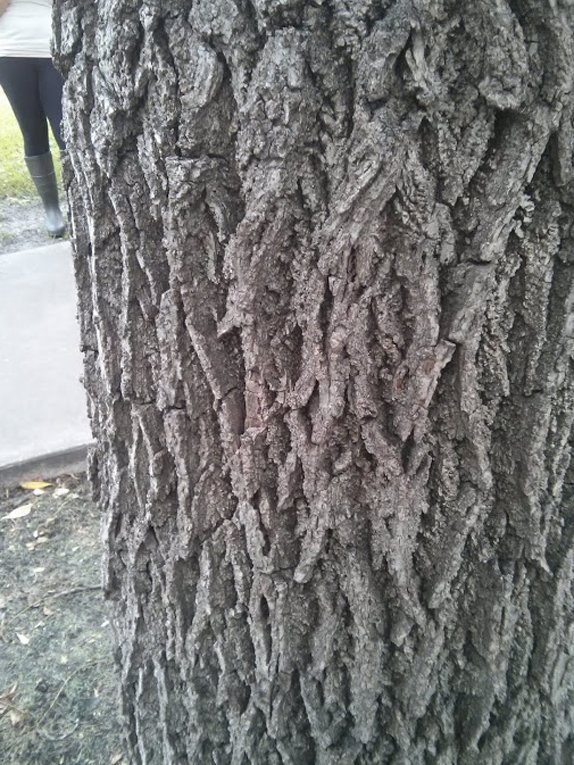
Morphology and Structure
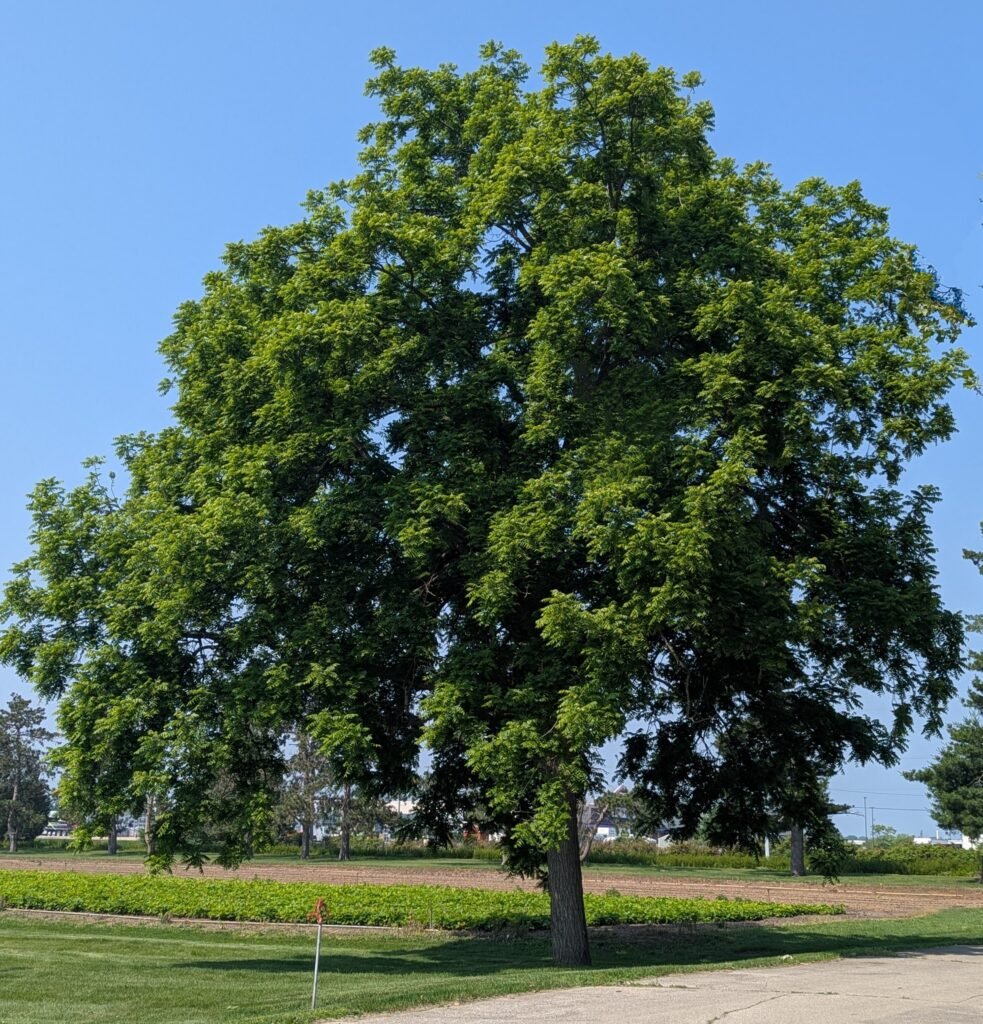
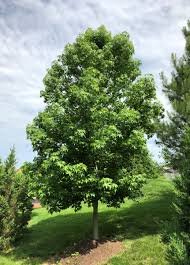
Overall Shape: Broadly rounded to open, symmetrical crown; straight trunk with clear bole in forest-grown individuals
Mature Height: 75–130 ft (23–40 m)
Mature Spread: 50–75 ft (15–23 m)
Trunk Diameter: 2–4 ft (60–120 cm)
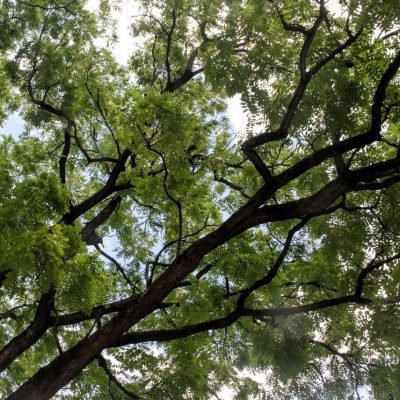
Bark: Dark brown to black; deeply furrowed into interlacing ridges forming a diamond pattern.
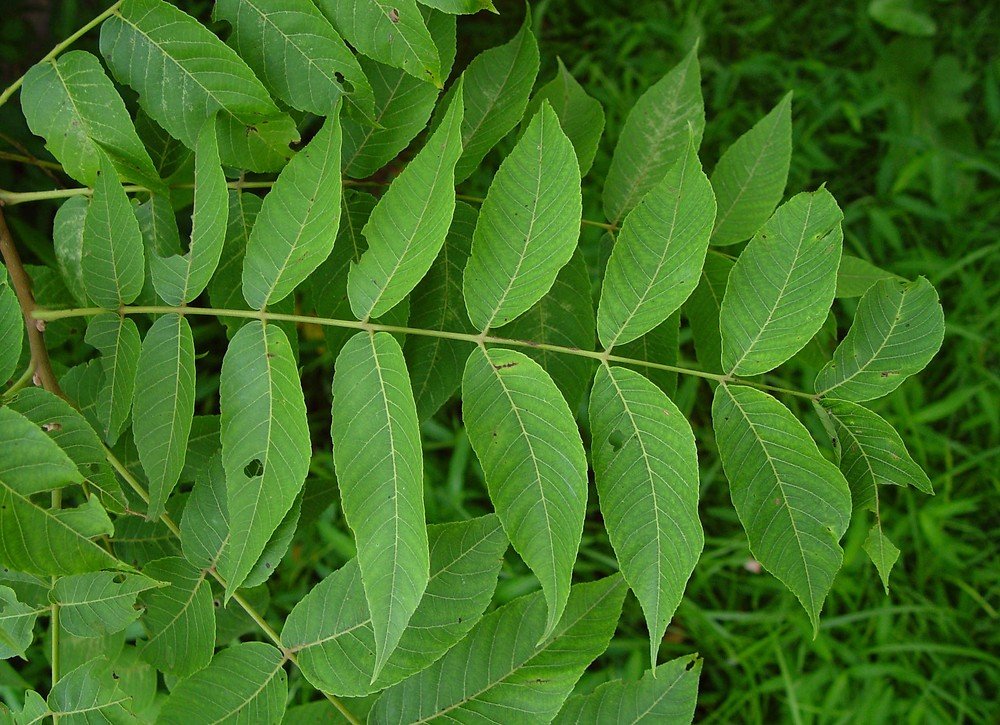
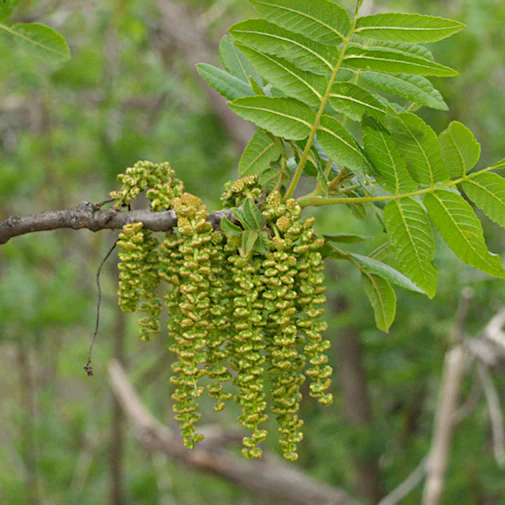
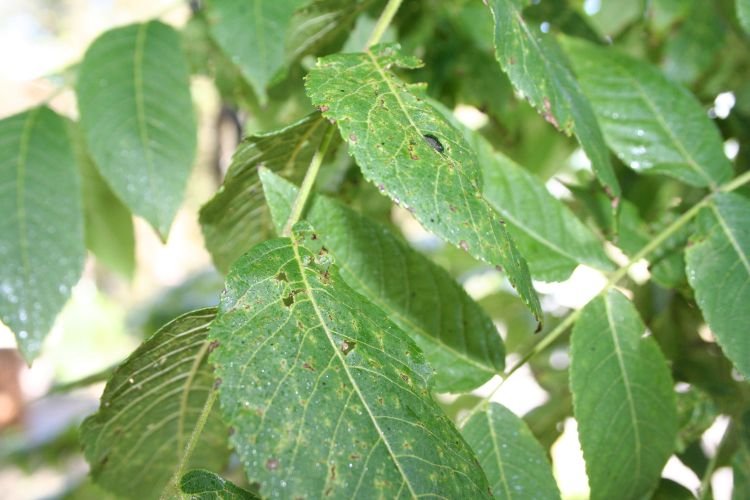
Leaves: Alternate, pinnately compound (12–24 in / 30–60 cm long) with 15–23 lanceolate leaflets (6–12 cm each); finely serrate margins; aromatic when crushed; yellow in fall.
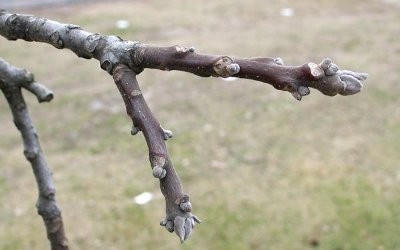
Buds: Large, tan, downy; terminal bud broad and blunt; lateral buds smaller, appressed.
Twigs: Stout, light brown; chambered pith; leaf scars with three distinct bundle scars forming a “monkey face” pattern.
Flowers: Male (staminate) flowers in pendulous catkins (8–12 cm); female (pistillate) flowers small, green, terminal clusters of 2–5.
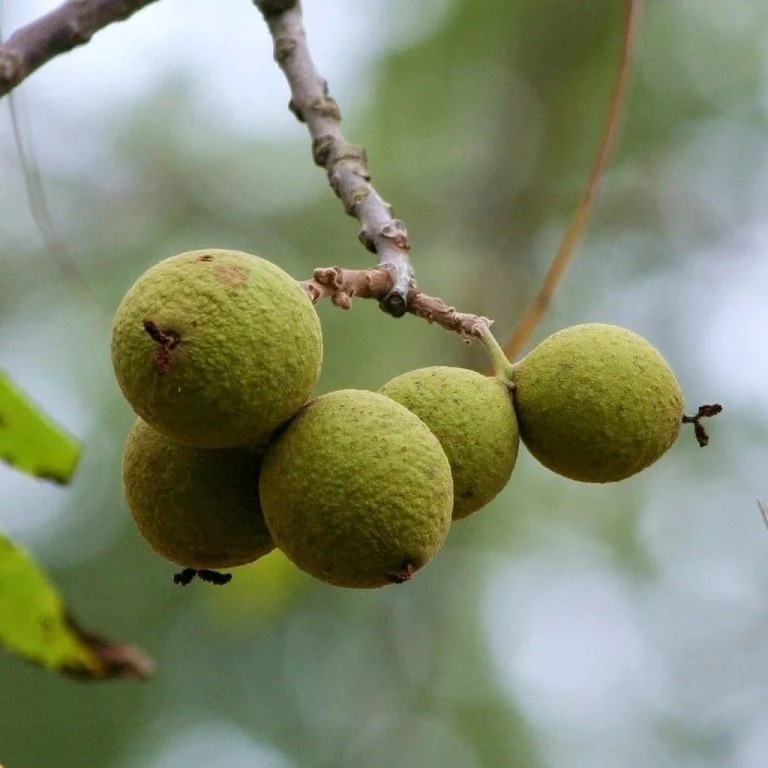
Fruit (Nut): Globose drupe with thick green husk enclosing a hard, deeply furrowed black nut; kernel oily and edible.
Fruit Size: 3.5–5 cm diameter
Fruit Maturation: September–October
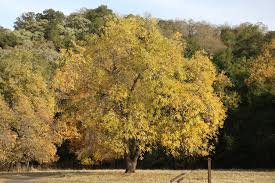
Management & Propagation
Propagation: By seed (requires cold stratification 90–120 days at 1–4°C); also propagated by grafting for improved nut cultivars.
Pests/Diseases: Affected by thousand cankers disease (caused by Geosmithia morbida vectored by Pityophthorus juglandis), walnut anthracnose (Ophiognomonia leptostyla), and tent caterpillars; generally resistant to most borers and insects.
Management: Requires deep, fertile, well-drained soils for optimal growth; pruning for form; avoid planting near gardens due to allelopathy.
Ecology and Habitat
Habitat: Rich bottomlands, slopes, and upland hardwood forests; thrives in deep, moist alluvial soils.
Soil Preference: Deep, fertile, loamy, well-drained soils; pH 6.0–7.5 preferred.
Water Requirements: Moderate; intolerant of prolonged flooding or standing water.
Sun Requirements: Full sun to light shade.
Temperature Needs: Hardy to USDA Zones 4–9 (−25 to +35 °C).
Tolerances: Moderately drought-tolerant; intolerant of compacted or poorly drained soils.
Establishment: Seedlings slow-growing at first; deep taproot; competitive dominance established in open areas.
Range: Native to eastern and central North America — from Massachusetts and Minnesota south to Florida and Texas.
Conservation Status: Least Concern (IUCN); populations locally impacted by disease spread.
Ecological Benefits
-
Nut production provides essential mast for squirrels, woodpeckers, and small mammals.
-
Juglone release shapes local plant communities by suppressing competitors (natural allelopathic control).
-
Deep root systems enhance soil stability and nutrient cycling.
-
Supports specialist insect fauna, including several Datana moths and Cydia weevils.
-
Promotes wildlife caching behavior, aiding seed dispersal and forest regeneration.

The Premier Network for The Holistic Homesteader
- All Posts
- Arboriculture
- Botany
- Field Guide
- Flowering
- Grains
- Grass
- Herb
- Homestead
- Horticulture
- Lifestyle
- Mycology
- Shrub
- Tree
- Back
- Plant Biology
- Plant Identification
- Pedology
- Planting & Transplanting
- Pruning
- Plant Diagnostics
- Plant Treatment
- Tree Risk Assessment
- Safe Climbing & Rigging
- Forest Management
- New Page 1
First Sub Title
- New Page 2
Second Sub Title
- New Page 3
Third Sub Title
- New Page 1
First Sub Title
- New Page 2
Second Sub Title
- New Page 3
Third Sub Title
- New Page 1
First Sub Title
- New Page 2
Second Sub Title
- New Page 3
Third Sub Title