Root and Canopy
The Premier Network for Holisic Homesteaders
- Home
- /
- Field Guide
- /
- American Elm (Ulmas americana)
American Elm (Ulmas americana)
Tree Facts
Foliage Persistence: Deciduous
Sexual Expression: Perfect (bisexual) flowers or occasionally polygamous
Lifespan: Typically 175–300 years; some trees >400 years recorded (Marks et al., 2017)
Growth Rate: Moderate to fast
Life Cycle: Perennial
Pollination: Wind-pollinated
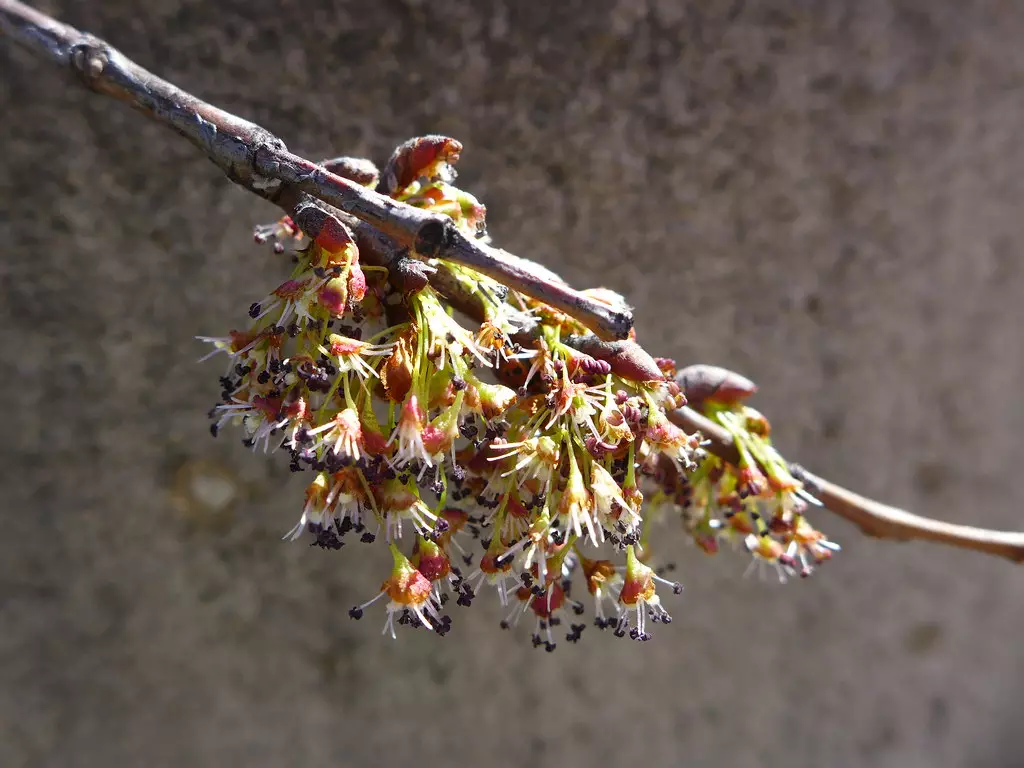
Bloom Period: Early spring (March–April, before leaf-out)
Uses & Toxicity
Practical Uses: Valued for its strong, interlocking grain wood — used in furniture, flooring, hockey sticks, and barrel staves. Historically prized as a street and shade tree.
Medicinal Uses: Bark decoctions used traditionally by Indigenous peoples for treating fever and wounds; inner bark mucilage once used as a demulcent.
Toxicity: Non-toxic to humans and wildlife; however, decayed bark may host fungal pathogens responsible for Dutch elm disease (Ophiostoma spp.).
History & Folklore
Historical Notes: Once the most iconic street tree in North America, famously lining towns before Dutch Elm Disease outbreaks in the 20th century.
Symbolism: Represents resilience, dignity, and endurance — widely planted as a memorial tree in the U.S.
Cultural Notes: Used by Indigenous tribes for canoes and utensils; colonial settlers prized its wood for wagon hubs and tool handles.
Similar Species & Lookalikes
Slippery Elm (Ulmus rubra) – red-tinged inner bark, rougher leaves
Rock Elm (Ulmus thomasii) – corky wings on twigs
Siberian Elm (Ulmus pumila) – smaller leaves, invasive
Key References
-
Marks, C.O. et al. (2017). The ecological role of American elm in floodplain forests. USDA Forest Service.
-
Elias, T.S. (1970). The genera of Ulmaceae in the southeastern United States. J. Arnold Arboretum.
-
Wiegrefe, S.J. et al. (1994). Phylogeny of elms (Ulmus, Ulmaceae): molecular evidence. Systematic Botany.
-
Lamp, W.O. et al. (1994). Patterns among host plants of potato leafhopper. J. Kansas Entomol. Soc.
-
Sherman, S.L. & Giannasi, D.E. (1988). Foliar flavonoids of Ulmus in eastern North America. Biochem. Syst. Ecol.
Taxonomy
Superdivision: Spermatophyta
Class: Magnoliopsida (Dicotyledons)
Subclass: Hamamelidae
Order: Urticales
Genus: Ulmus L.
Species: Ulmus americana L.
Etymology:
The genus name Ulmus is the classical Latin name for elms, used by Pliny the Elder. The species epithet americana refers to its North American origin and widespread distribution (Elias, 1970).
Common Names:
American Elm, White Elm, Water Elm, Soft Elm, Florida Elm
Morphology and Structure
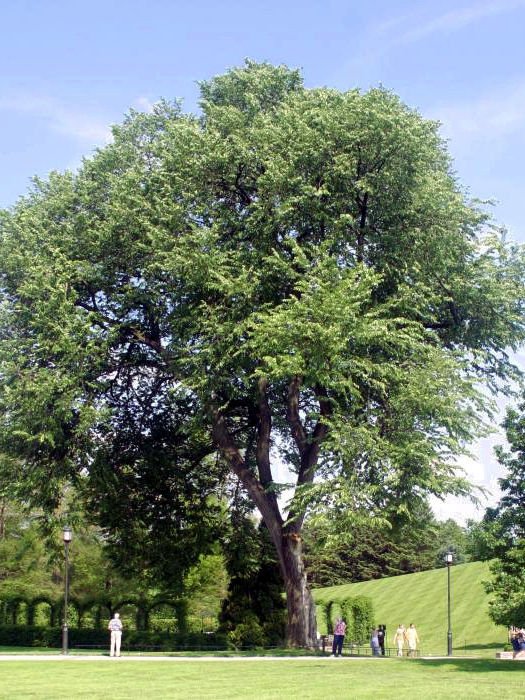
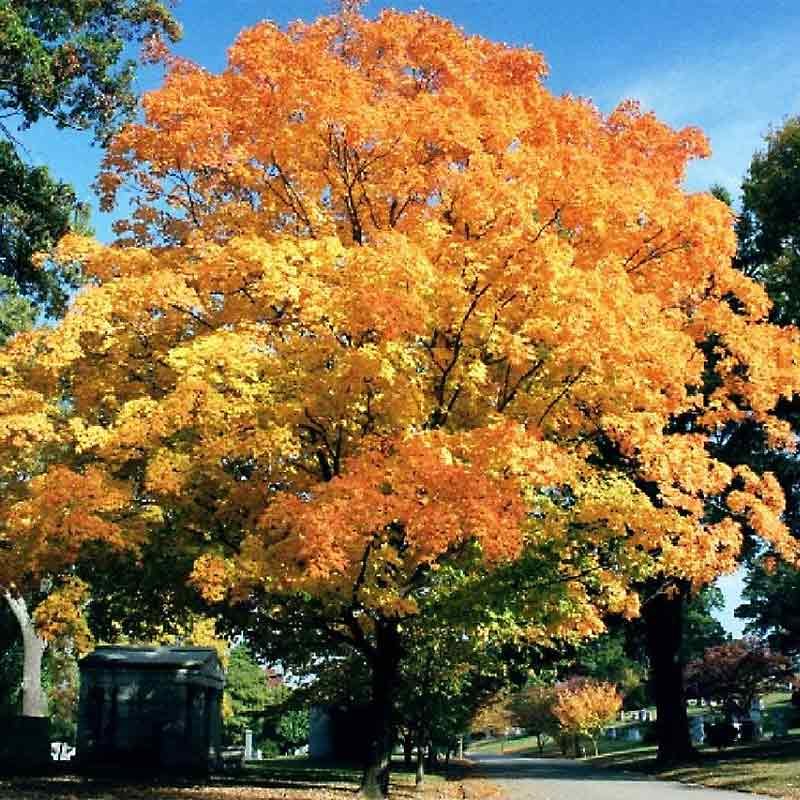
Overall Shape: Vase-shaped crown with broad, arching limbs and an open, spreading canopy
Mature Height: 60–100 ft (18–30 m), occasionally to 130 ft. (40 m) in rich soils
Mature Spread: 60–90 ft. (18–27 m)
Trunk Diameter: 3–6 ft. (0.9–1.8 m)
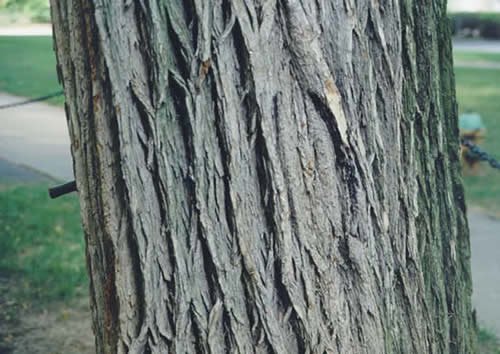
Bark: Dark gray, becoming deeply furrowed and divided into broad, flat ridges with age. Young bark smooth and grayish-brown.
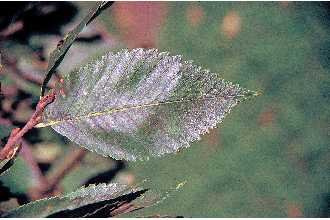
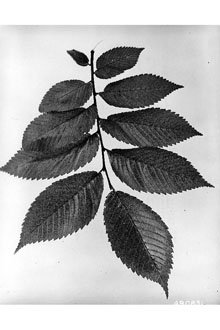
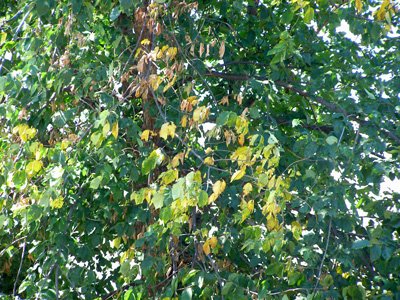
Leaves: Simple, alternate, doubly serrate, ovate to oblong, 7–12 cm long. Asymmetrical base, acuminate tip; dark green and rough above, paler and smooth beneath; turn yellow in fall.
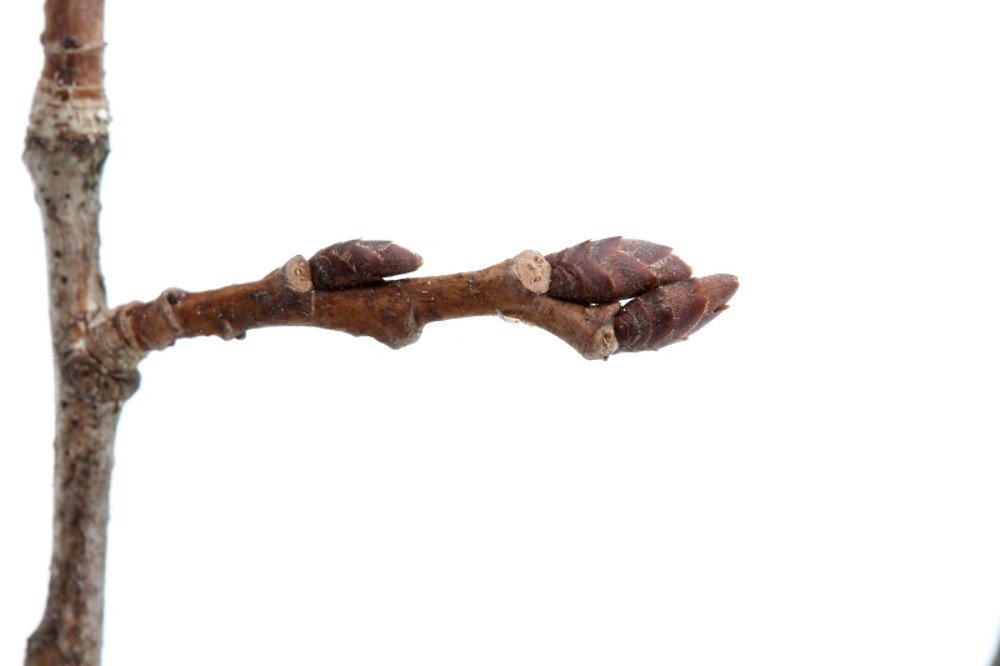
Buds: Ovoid, dark brown, often rusty-hairy, with overlapping scales.
Twigs: Slender, zigzag, brownish-gray; pith solid; leaf scars slightly notched.
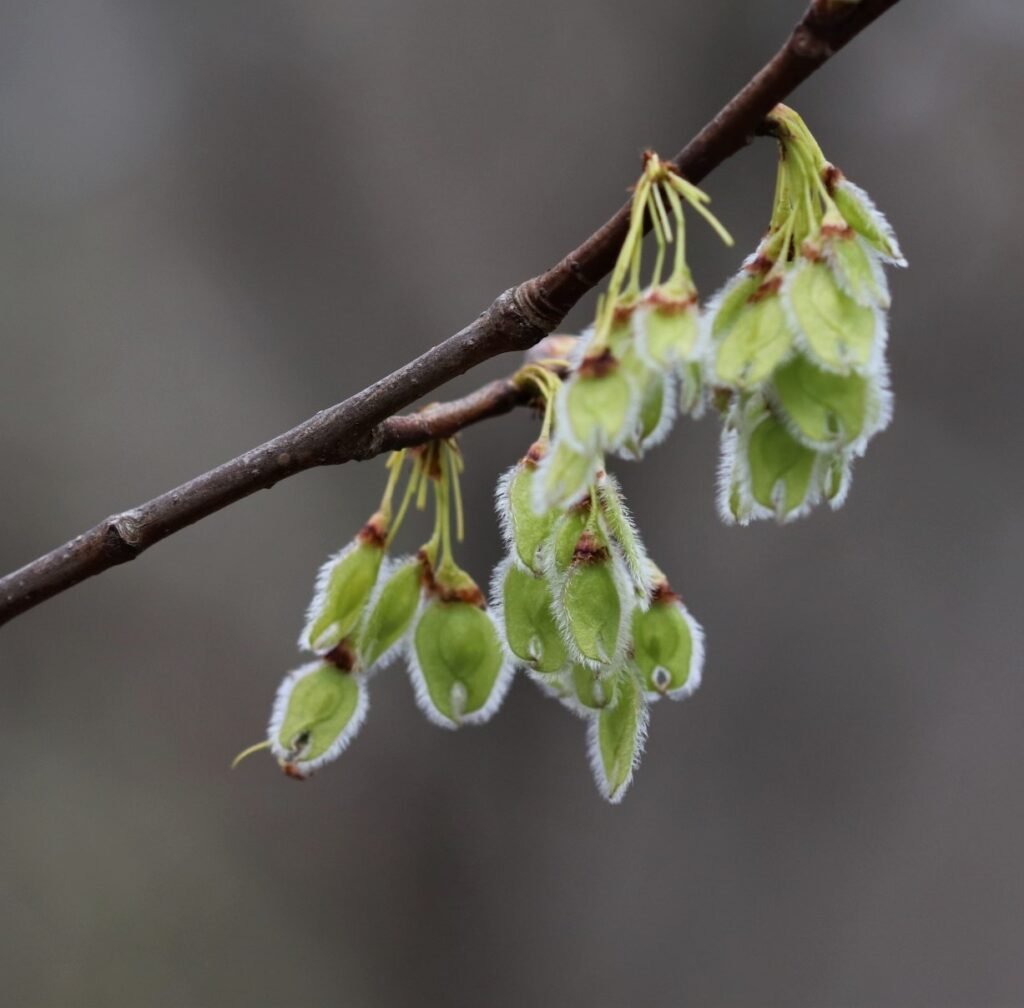
Flowers: Apetalous, small, clustered in fascicles on short pedicels; perfect or occasionally unisexual; appear before leaves.
Fruit (Samara): Flat, circular to oval, papery-winged seed (1–2 cm), fringed margins, maturing in late spring (April–May).
Management & Propagation
Propagation: By seed (no dormancy, germinates immediately); vegetative propagation via root cuttings or grafting resistant cultivars.
Pests/Diseases: Highly susceptible to Dutch Elm Disease (Ophiostoma novo-ulmi, O. ulmi), Elm Yellows (phytoplasma), and Elm Leaf Beetle (Xanthogaleruca luteola). Resistant or tolerant cultivars include ‘Princeton,’ ‘Valley Forge,’ and ‘New Harmony.’
Management: Plant resistant varieties; maintain canopy health through pruning and sanitation; avoid root wounding to limit pathogen spread.
Ecology and Habitat
Habitat: Floodplains, bottomlands, and rich alluvial soils; dominant along rivers and lowlands.
Soil Preference: Moist, well-drained loams or silts; tolerates occasional flooding but not prolonged waterlogging.
Water Requirements: Moderate to high
Sun Requirements: Full sun to partial shade
Temperature Needs: Hardy to USDA Zones 2–9 (−45 to +38 °C)
Tolerances: Cold, periodic flooding, compacted urban soils; moderately tolerant of drought and pollution
Establishment: Rapid early growth; regenerates well from seed and stump sprouts
Range: Native to eastern and central North America — from Nova Scotia and Manitoba south to Florida and Texas
Conservation Status: Least Concern (IUCN), though natural populations have been decimated by Dutch Elm Disease
Ecological Benefits
-
Keystone canopy species in riparian forests; stabilizes soil and prevents erosion.
-
Provides nesting sites for birds and habitat for cavity-nesting mammals.
-
Samaras serve as early-season food for birds and small mammals.
-
Supports diverse insect communities (Lamp et al., 1994).
-
Plays a key role in post-floodplain succession (Marks, 2017).

The Premier Network for The Holistic Homesteader
- All Posts
- Arboriculture
- Botany
- Field Guide
- Flowering
- Grains
- Grass
- Herb
- Homestead
- Horticulture
- Lifestyle
- Mycology
- Shrub
- Tree
- Back
- Plant Biology
- Plant Identification
- Pedology
- Planting & Transplanting
- Pruning
- Plant Diagnostics
- Plant Treatment
- Tree Risk Assessment
- Safe Climbing & Rigging
- Forest Management
- New Page 1
First Sub Title
- New Page 2
Second Sub Title
- New Page 3
Third Sub Title
- New Page 1
First Sub Title
- New Page 2
Second Sub Title
- New Page 3
Third Sub Title
- New Page 1
First Sub Title
- New Page 2
Second Sub Title
- New Page 3
Third Sub Title