Root and Canopy
The Premier Network for Holisic Homesteaders
- Home
- /
- Field Guide
- /
- American Ginseng
American Ginseng (Panax quinquefolius L.)
Plant Facts
Foliage Persistence: Deciduous herbaceous perennial
Sexual Expression: Hermaphroditic (perfect flowers)
Lifespan: 30–50 years under natural conditions
Growth Rate: Slow; takes 5–10 years to reach maturity
Life Cycle: Perennial
Pollination: Insect-pollinated, mainly by bees and syrphid flies
Bloom Period: Mid to late summer (June–July)
Management & Propagation
Propagation: By seed (requires 18–22 months for natural germination; cold-warm stratification sequence required) or by root division in cultivation.
Pests/Diseases: Susceptible to damping-off, Alternaria leaf blight, Phytophthora root rot, and root nematodes; browsing by deer and small mammals reduces populations.
Management: Shade-grown in well-drained, humus-rich forest soils; prefers natural forest canopy cover of 70–80%. Sustainable harvesting essential for population conservation.
Morphology and Structure
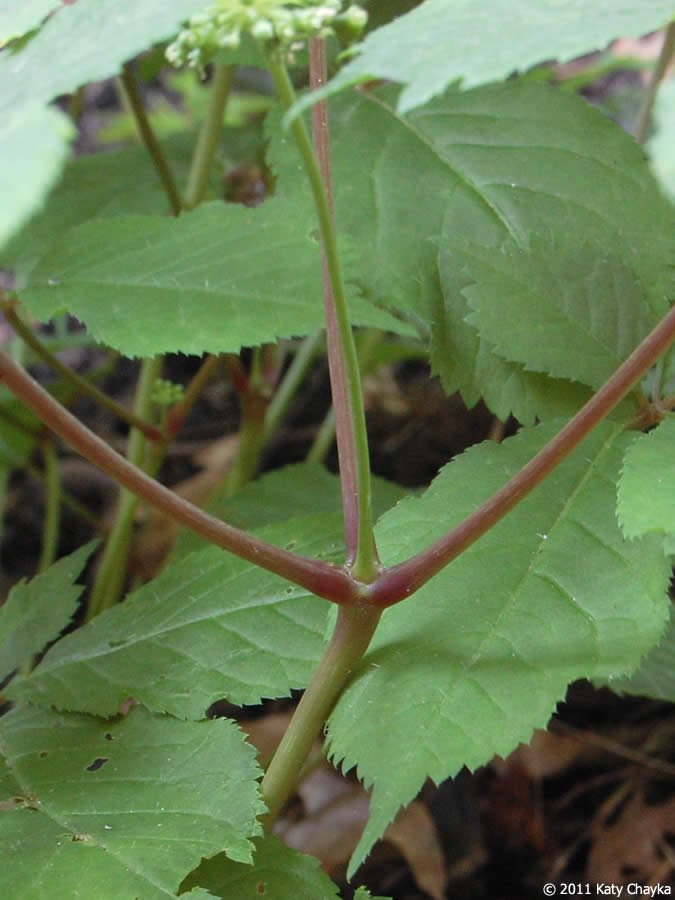
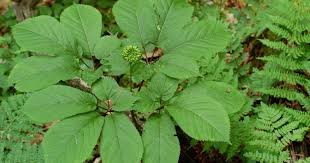
Overall Shape: Low-growing herb with a single erect stem, topped by a whorl of compound leaves and a central umbel of flowers.
Mature Height: 8–24 in. (20–60 cm)
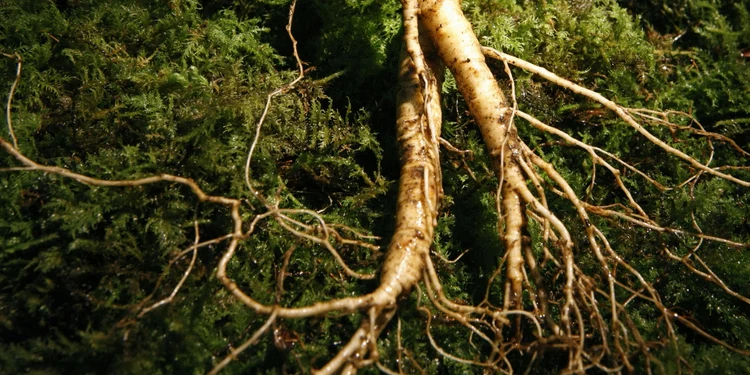
Root System: Fleshy, spindle-shaped taproot with concentric wrinkles (“growth rings”), light brown exterior, cream interior.
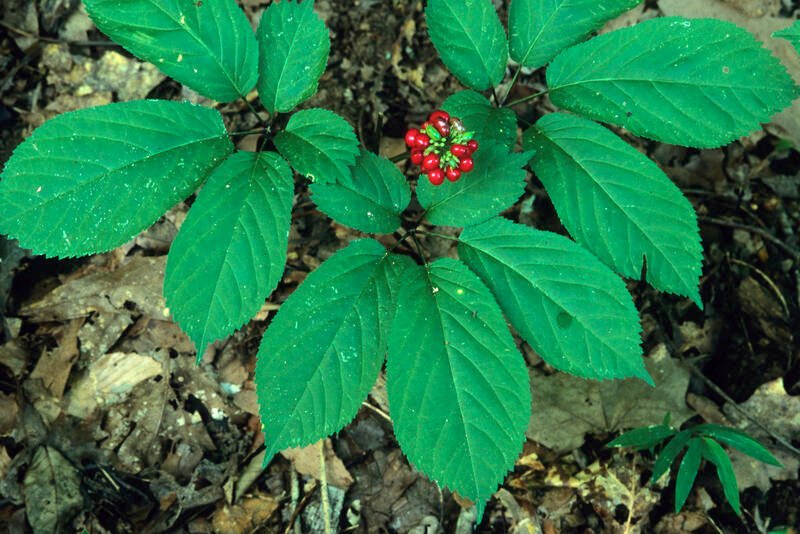
Leaves: Palmately compound; typically 3–5 leaflets per leaf (rarely 6–7); leaflets ovate to obovate, serrate margins; 5–15 cm long; dark green above, lighter below.
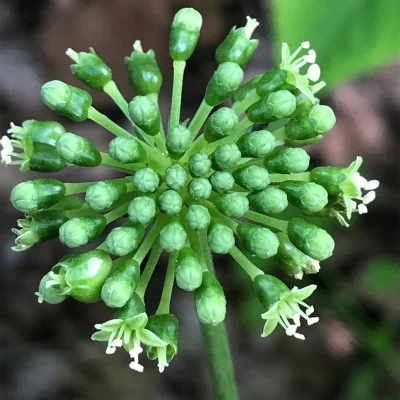
Flowers: Small, greenish-white, borne in a solitary terminal umbel; 6–20 flowers per umbel; 5-petaled, bisexual.
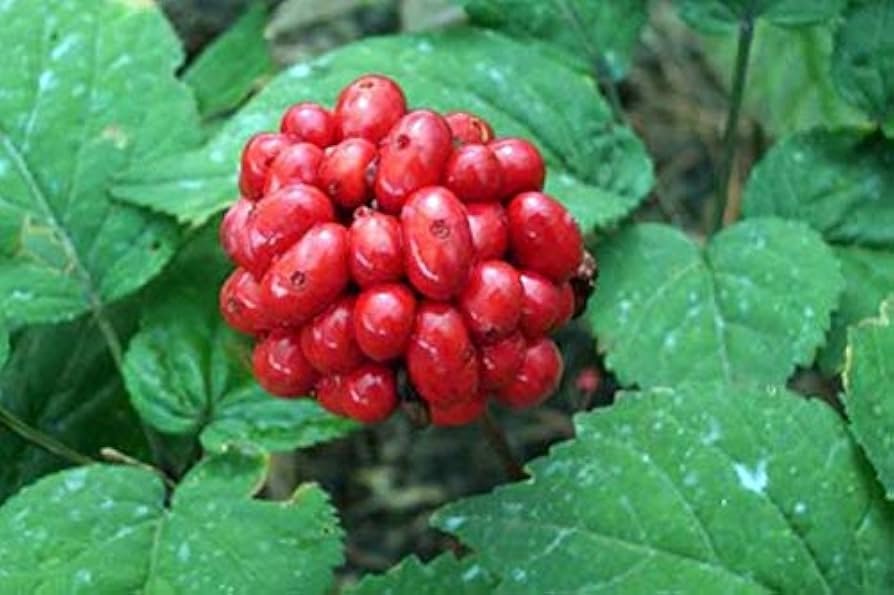
Fruit: Bright red, fleshy berry containing 1–3 seeds; ripens August–September.
Uses & Toxicity
Practical Uses: Highly valued for its dark, durable wood, used in fine furniture, gunstocks, veneers, and cabinetry; nuts edible, used in confectionery and baking.
Medicinal Uses: Traditional Indigenous and early herbal remedies employed the husk and bark for anti-parasitic and antiseptic properties; juglone investigated for potential antimicrobial and anticancer effects (Hejl & Koster, 2004).
Toxicity: Releases juglone (5-hydroxy-1,4-naphthoquinone), an allelopathic compound toxic to many nearby plants (especially solanaceous crops). Green husks can stain skin and clothing; non-toxic to humans in nut form.
History & Folklore
Historical Notes: Used by Indigenous peoples, including the Iroquois, Cherokee, and Menominee, as a tonic and remedy for fatigue and respiratory illness. French Jesuit missionaries first documented its use in Canada (1716), sparking a centuries-long trade with China.
Symbolism: Represents health, endurance, and prosperity. In Chinese medicine, American ginseng is considered “cool” in nature, balancing vitality and calmness.
Similar Species & Look-alikes
Asian Ginseng (Panax ginseng) – shorter stem, different ginsenoside ratios, native to East Asia.
Dwarf Ginseng (Panax trifolius) – smaller stature, three leaflets, yellowish fruit.
Virginia Snakeroot (Aristolochia serpentaria) – superficially similar leaves, lacks fleshy red berries.
Key References
Attele, A. S., Wu, J. A., & Yuan, C. S. (1999). Ginseng pharmacology: Multiple constituents and multiple actions. Biochemical Pharmacology, 58(11), 1685–1693.
Coon, J. T., & Ernst, E. (2002). Panax ginseng: A systematic review of adverse effects and drug interactions. Drug Safety, 25(5), 323–344.
McGraw, J. B., et al. (2013). Long-term demography of wild American ginseng populations. Ecology, 94(1), 89–98.
Robbins, C. (2000). American Ginseng: The root of North America’s herbal heritage. TRAFFIC North America.
Persons, W. S., & Davis, J. M. (2005). Growing and marketing ginseng, goldenseal and other woodland medicinals.
Taxonomy
Superdivision: Spermatophyta
Class: Magnoliopsida (Dicotyledons)
Subclass: Asteridae
Order: Apiales
Family: Araliaceae (Ginseng Family)
Genus: Panax L.
Species: Panax quinquefolius L.
Etymology: The genus name Panax derives from the Greek pan (“all”) and akos (“cure”), meaning “cure-all,” referring to its traditional medicinal reputation. The species epithet quinquefolius refers to its palmately compound leaves with five leaflets.
Common Names: American Ginseng, Wild Ginseng, Five-leaf Ginseng, Sang (Appalachian name)
Ecology and Habitat
Habitat: Rich, mesic deciduous forests, typically in north- or east-facing slopes; prefers shaded understories of sugar maple, basswood, and tulip poplar forests.
Soil Preference: Deep, loamy, moist but well-drained soils high in organic matter; pH 5.5–6.5 optimal.
Water Requirements:
Moderate; requires consistent moisture but intolerant of waterlogging.
Sun Requirements: Partial to full shade (understory species).
Temperature Needs: Hardy to USDA Zones 3–8 (−35 to +30 °C).
Tolerances: Sensitive to heat and drought; intolerant of direct sunlight or compacted soils.
Establishment: Slow to establish; seedlings may take 2–3 years to develop first three-pronged leaf.
Range: Native to eastern North America — from Quebec and Manitoba south to Georgia, Louisiana, and Oklahoma.
Conservation Status: Listed as Vulnerable (IUCN) and CITES Appendix II due to overharvesting and habitat loss (Robbins, 2000).
Ecological Benefits

The Premier Network for The Holistic Homesteader
- All Posts
- Arboriculture
- Botany
- Field Guide
- Flowering
- Grains
- Grass
- Herb
- Homestead
- Horticulture
- Lifestyle
- Mycology
- Shrub
- Tree
- Back
- Plant Biology
- Plant Identification
- Pedology
- Planting & Transplanting
- Pruning
- Plant Diagnostics
- Plant Treatment
- Tree Risk Assessment
- Safe Climbing & Rigging
- Forest Management
- New Page 1
First Sub Title
- New Page 2
Second Sub Title
- New Page 3
Third Sub Title
- New Page 1
First Sub Title
- New Page 2
Second Sub Title
- New Page 3
Third Sub Title
- New Page 1
First Sub Title
- New Page 2
Second Sub Title
- New Page 3
Third Sub Title