Tree Facts
Foliage Persistence: Deciduous
Sexual Expression: Monoecious (male and female flowers on the same plant)
Lifespan: Typically 40–60 years; colonies can persist longer through root suckering [Dirr, 2009]
Growth Rate: Moderate
Life Cycle: Perennial
Pollination: Wind-pollinated (Anemophilous)
Bloom Period: Early spring (February–April, before leaf emergence)
Uses & Toxicity:
Practical Uses: Edible nuts eaten raw, roasted, or ground into meal; used in confections and baking. Wood suitable for small crafts, tool handles, and basketry. Commonly planted for wildlife habitat and erosion control [Molnar et al., 2010].
Medicinal Uses: Used historically by Indigenous peoples as a food source and for medicinal tonics. Leaves and nuts contain polyphenols and antioxidants with potential health benefits [Peachey et al., 2020].
Toxicity: Non-toxic to humans and most animals; may cause allergic reactions in individuals sensitive to tree nuts.
History & Folklore:
History/Folk Lore: Used by Indigenous tribes such as the Ojibwe and Cherokee for food and medicine; recorded by early European settlers as a key wild nut species [Furlow, 1990].
Symbolism: Associated with wisdom, hidden knowledge, and abundance in folklore; hazelnuts represented fertility and protection in Native and European traditions.
Similar Species & Look-a-likes:
Similar Species: Corylus cornuta (Beaked Hazelnut) — distinguished by its long tubular husk extending beyond the nut.
Lookalikes: Alnus incana (Speckled Alder) — differs in bud shape and catkin structure.
Key References
- Furlow, J. J. (1990). The Genera of Betulaceae in the Southeastern United States. Journal of the Arnold Arboretum, 71(1), 1–38.
- Dirr, M. A. (2009). Manual of Woody Landscape Plants. Stipes Publishing.
- Molnar, T. J., et al. (2010). Hybrid Hazelnut Development for Eastern North America. Acta Horticulturae, 845, 125–134.
- Peachey, E. T., et al. (2020). Nut Quality and Blight Resistance in Native Hazelnuts. HortScience, 55(7), 1001–1009.
USDA NRCS. (2024). Corylus americana Walt. Plants Database Profile.
Morphology and Structure
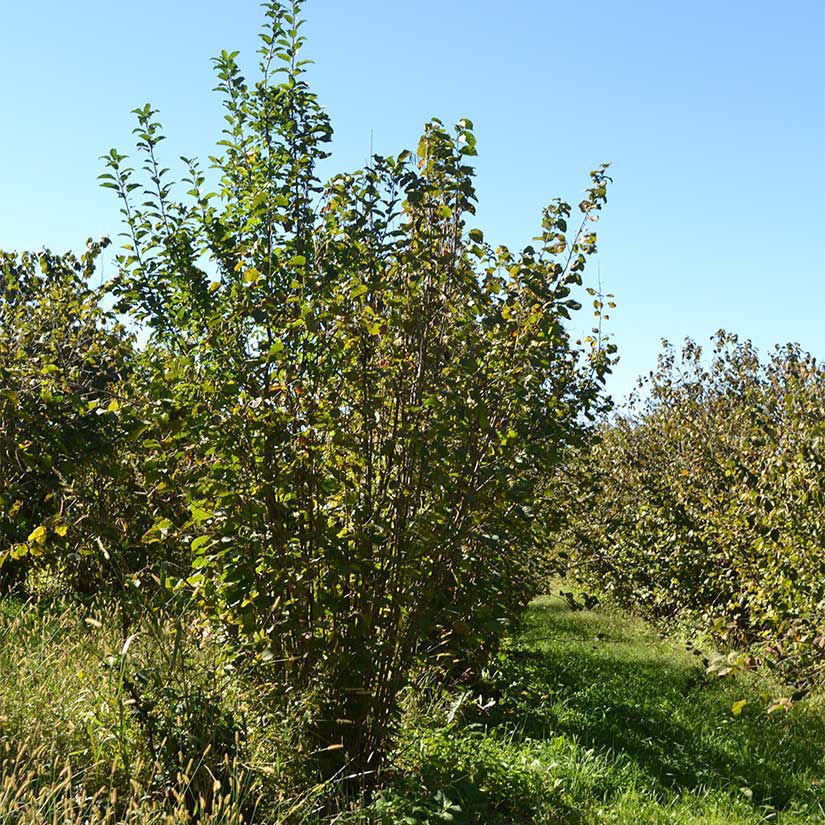
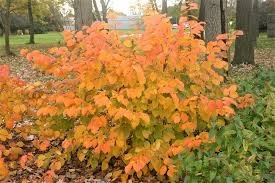
Overall Shape: Rounded, multi-stemmed shrub forming dense thickets.
Mature Height: 6–15 ft (2–5 m)
Mature Spread: 8–12 ft (2.5–4 m)
Mature Trunk Diameter: N/A (multi-stemmed form)
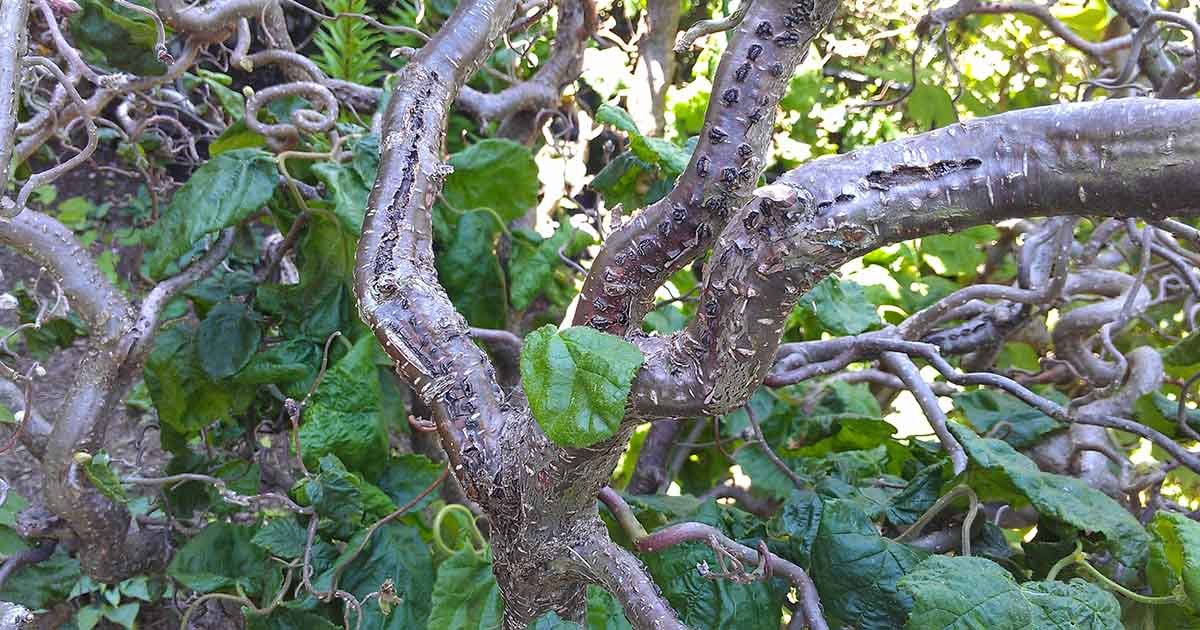
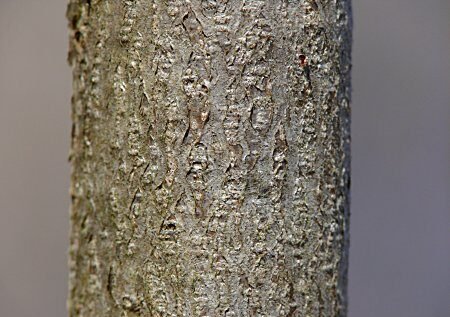
Bark: Thin, gray-brown, smooth on young stems, becoming slightly scaly and exfoliating with age.
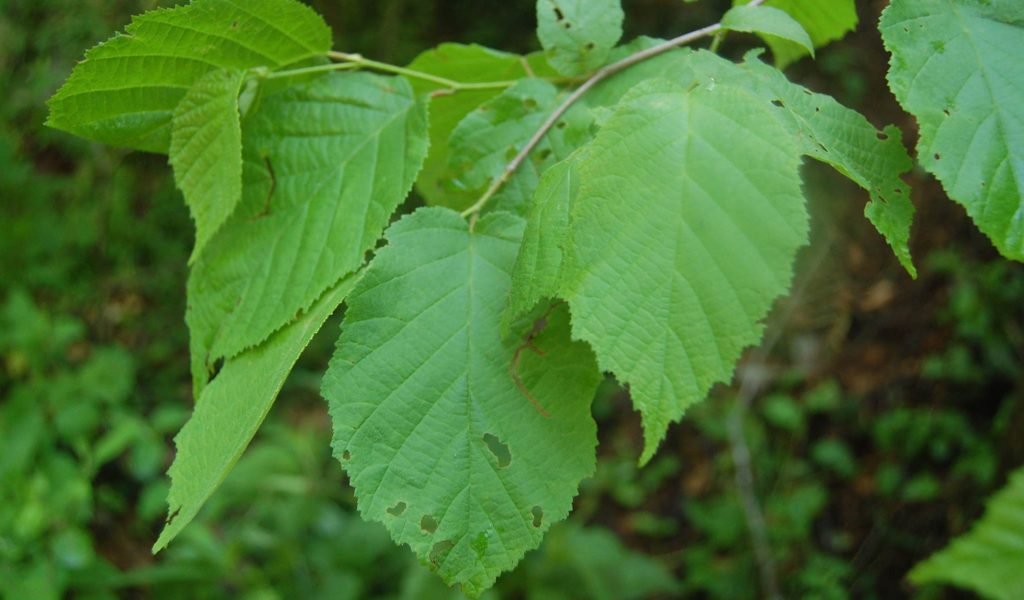
Leaves: Simple, alternate, broadly ovate to nearly round (6–12 cm long) with doubly serrated margins and acuminate tips. Upper surface dark green and rough; underside paler and softly pubescent. Fall color yellow to coppery brown.
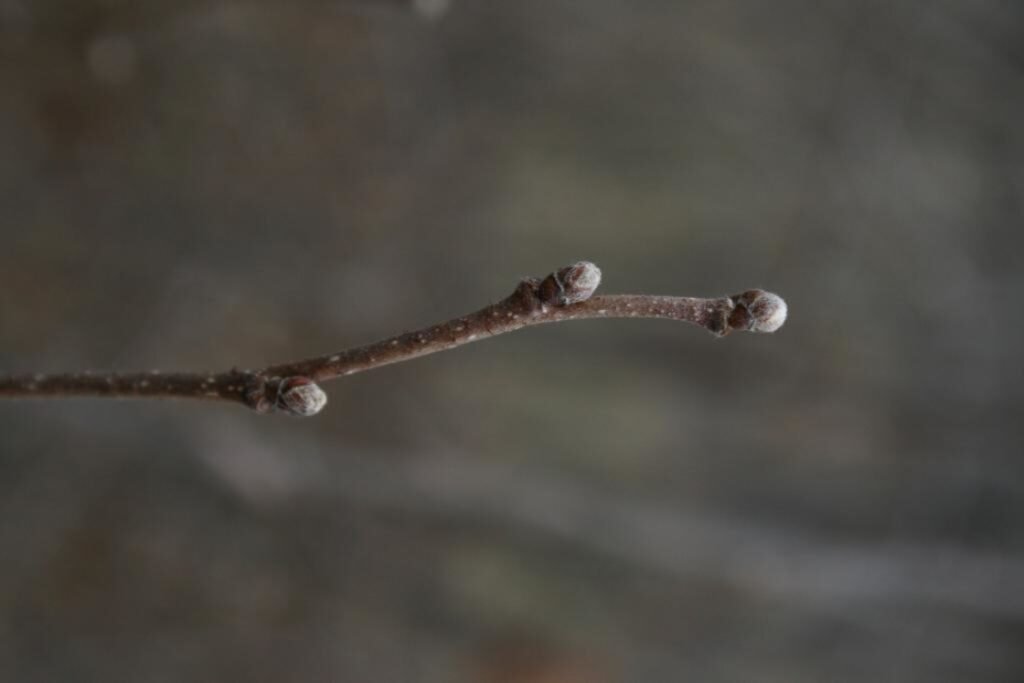
Buds: Rounded to blunt, brown, with overlapping scales.
Twigs: Slender, light brown to gray, softly hairy, solid pith.
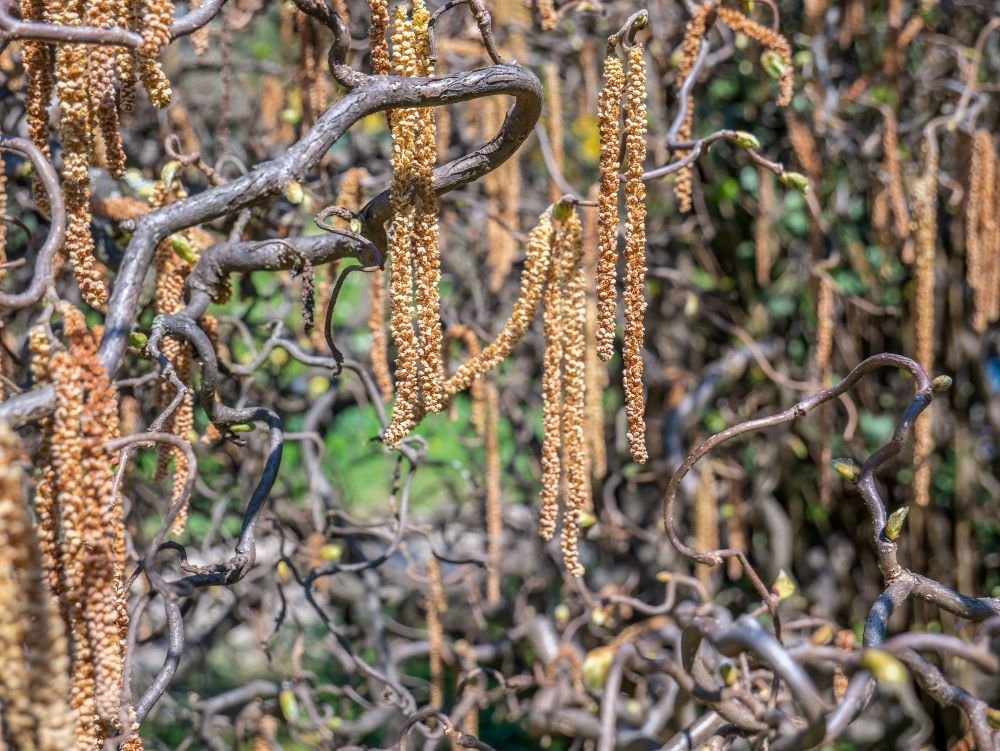
Flowers: Male catkins (4–8 cm) develop in late summer, overwinter, and release yellow pollen in early spring before leaf-out. Female flowers are small buds with protruding red stigmas, appearing on the same branchlets.
Flower Size: Catkins 4–8 cm; female flowers <5 mm.
Bloom Time: Late winter to early spring (February–April).
Pollination: By wind.
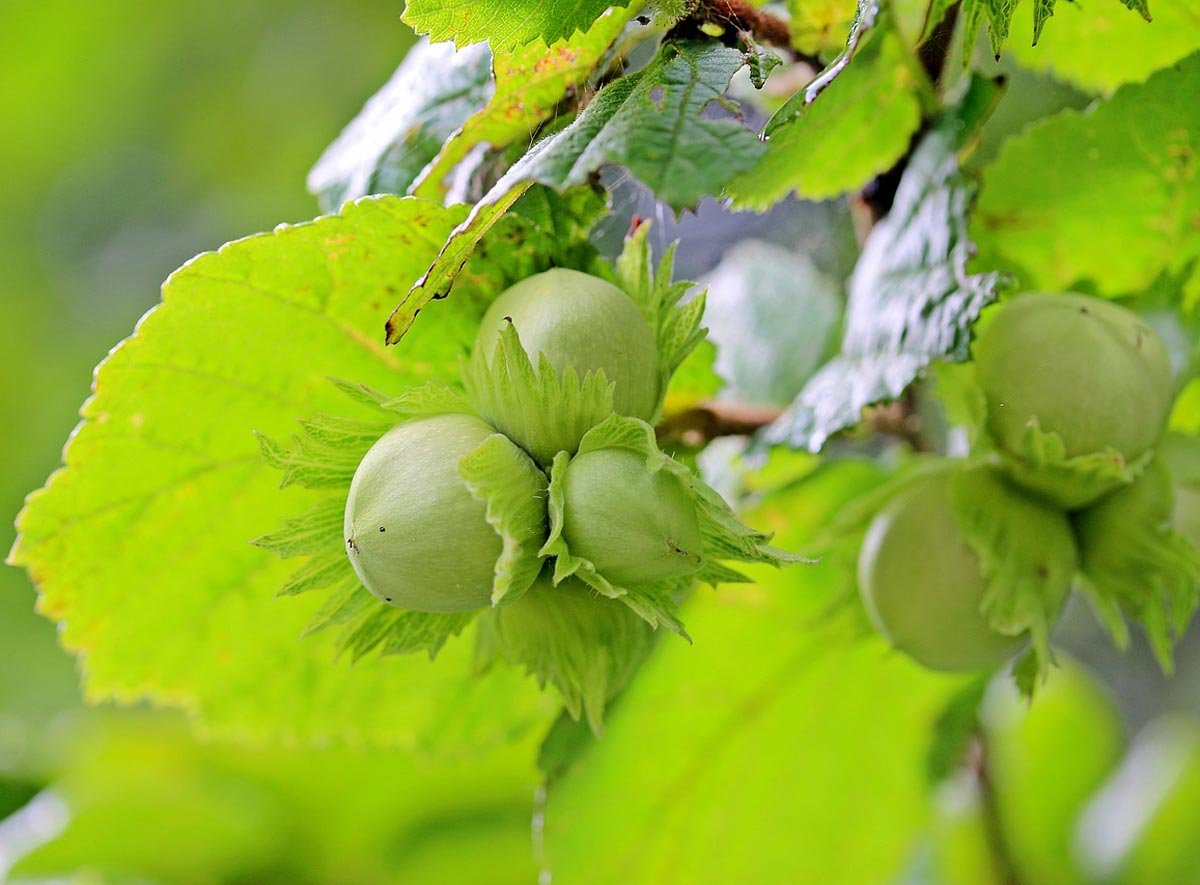
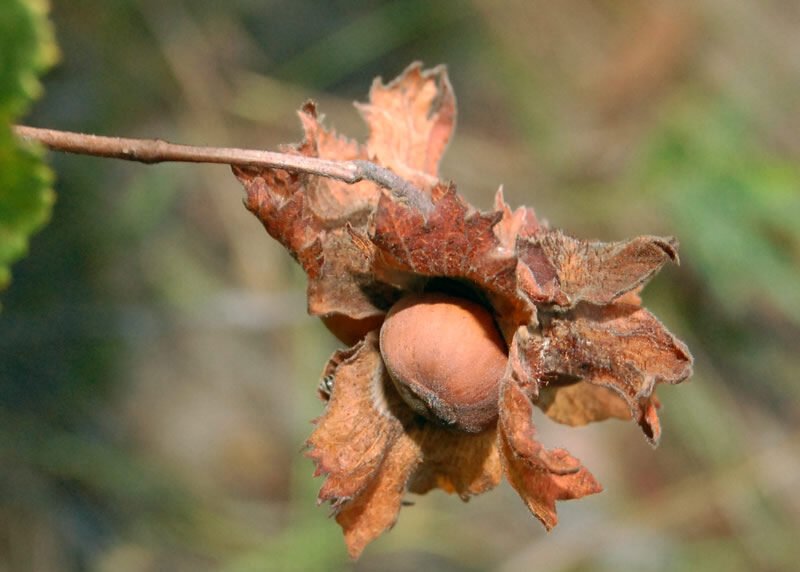
Fruit: A round to ovoid nut (1.5–2 cm diameter) enclosed in a leafy, fringed husk about twice the nut’s length; borne in clusters of 2–6.
Fruit Shape: Spherical to ovoid.
Fruit Color: Green, turning tan to brown when mature.
Fruit Maturation: Late summer to early fall (August–October).
Management & Propagation
Propagation: By seed (requires cold stratification for 90–120 days at 4 °C), root suckers, or layering; also propagated vegetatively for cultivar improvement [USDA NRCS, 2024].
Pests/Diseases: Susceptible to Eastern Filbert Blight (Anisogramma anomala), aphids, and filbert weevil (Curculio obtusus); generally tolerant of other pests.
Management: Low-maintenance; prune to shape and enhance nut production. Tolerant of coppicing and resprouting after disturbance.
Ecology and Habitat
Habitat: Forest edges, thickets, slopes, and open woodlands; common in early to mid-successional habitats.
Soil Preference: Well-drained loams or sandy loams; slightly acidic to neutral (pH 6.0–7.0).
Water Requirements: Moderate; drought-tolerant once established.
Sun Requirements: Full sun to partial shade; best nut production in full sun.
Temperature Needs: Hardy to USDA Zones 4–9 (−34 to +35 °C / −30 to +95 °F).
Tolerances: Drought, moderate shade, poor soils; intolerant of waterlogging.
Establishment: Readily regenerates via root suckers; forms colonies after disturbance.
Range: Eastern and Central North America — from Maine and Quebec west to Saskatchewan, and south to Georgia, Oklahoma, and Kansas [Furlow, 1990].
Conservation Status: Least Concern (IUCN); populations stable.
Ecological Benefits: Important wildlife food source for squirrels, deer, turkeys, and grouse. Dense growth offers nesting cover and soil stabilization.

1 Comment
Ut laudantium rerum quia rem omnis. Voluptatem cupiditate eos esse porro iure sit Et et repudiandae voluptas qui Quisquam maiores qui autem magni dignissimos harum. Totam inventore modi qui Laboriosam est enim commodi rem excepturi Itaque minus ex quasi qui nisi. Provident quam iusto ipsum nulla est. quia repellat labore rerum rerum magnam. Sint culpa mollitia illo atque eum. Minus eaque ipsum cumque illo Iste reprehenderit est et. nisi enim voluptatibus error tempore expedita soluta. At iusto earum ut. Inventore placeat labore laborum error velit.