Root and Canopy
The Premier Network for Holisic Homesteaders
- Home
- /
- Field Guide
- /
- Little Bluestem
Little Bluestem (Shizachyrium scoparium)
Plant Facts
Foliage Persistence: Perennial, warm-season grass; foliage dies back in winter.
Sexual Expression: Monoecious; perfect or unisexual florets on the same plant.
Lifespan: Typically 10–20 years; clonal stands can persist for decades (Weaver, 1954).
Growth Rate: Moderate to fast in full sun and well-drained soils.
Life Cycle: Perennial.
Pollination: Wind-pollinated (anemophilous).
Bloom Period: Mid to late summer (July–September).
Morphology & Structure
Overall Shape:
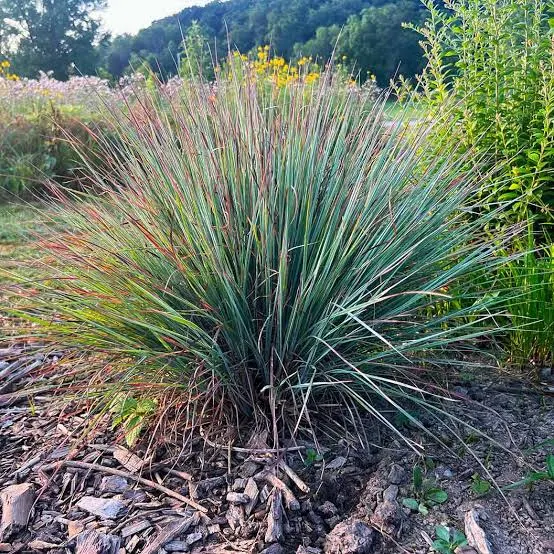
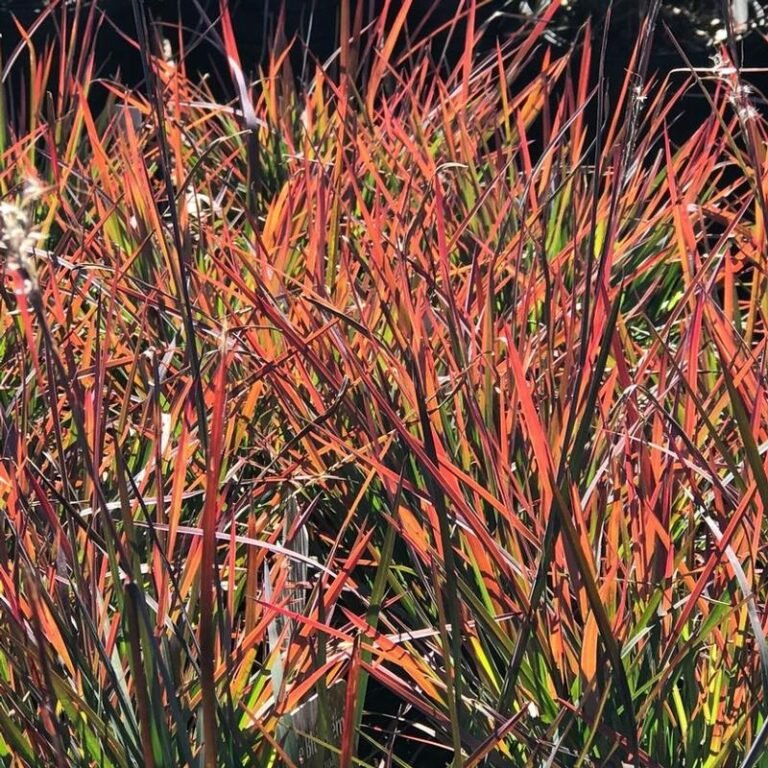
Dense, upright, clump-forming bunchgrass with narrow, vertical habit; turns bronze to purplish in fall and winter.
Mature Height: 2–4 ft. (0.6–1.2 m).
Mature Spread: 1–2 ft. (30–60 cm) per clump.
Roots: Deep fibrous root system reaching 5–8 ft., providing excellent soil stabilization (USDA NRCS, 2018).
Leaves: Simple, linear, 3–10 mm wide and up to 30 cm long, flat or folded; blue-green in summer, turning reddish-bronze in fall; basal sheaths slightly hairy.
Stems (Culms): Slender, erect, wiry; often reddish at maturity.
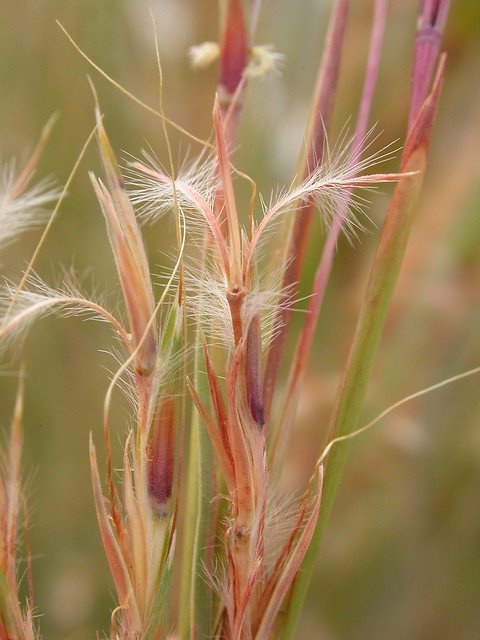
Inflorescence: Slender racemes (3–6 cm long), solitary or in small clusters; each spikelet bearing one fertile floret with a twisted awn 8–15 mm long.
Flowers: Tiny, reddish at anthesis; wind-pollinated.
Bloom Time: Mid to late summer (July–September).
Fruit: Caryopsis (true grass grain), 2–3 mm long, light brown with awns; disperses by wind from September–November.
Uses & Toxicity
Ecological Use: Widely used for prairie restoration, erosion control, and ornamental planting. Valuable forage for livestock during early growth; tolerant of light to moderate grazing (Haddock, 2005). Deep roots make it ideal for soil conservation and slope stabilization.
Medicinal and Ethnobotanical Uses: Used historically by Indigenous peoples, including the Cherokee and Lakota, for bedding, insulation, and ceremonial smudges (Kindscher, 1992).
Toxicity: Non-toxic; safe for grazing animals and wildlife.
History/Folklore:
Historically abundant in North American prairies and valued for sod roofing and hay. Indigenous traditions regarded it as a “grass of resilience,” symbolizing renewal after fire or drought (Kindscher, 1992).
Symbolism:
Represents endurance, resilience, and the regenerative spirit of the prairie.
Similar Species & Look-Alikes
Similar Species:
Andropogon gerardii (Big Bluestem) — taller, with three-part “turkey-foot” seed heads.
Andropogon virginicus (Broomsedge) — hairier, with coarser texture and paler foliage.
Key References
-
Weaver, J.E. (1954). North American Prairie. Johnsen Publishing.
-
Haddock, M. (2005). Wildflowers and Grasses of Kansas. University Press of Kansas.
-
Kindscher, K. (1992). Medicinal Wild Plants of the Prairie. University Press of Kansas.
-
USDA NRCS. (2018). Plant Fact Sheet: Schizachyrium scoparium (Little Bluestem).
-
Dey, D.C. & Stambaugh, M.C. (2012). Fire in Eastern Oak Forests Conference. USDA Forest Service.
Taxonomy
Class: Magnoliopsida (Dicotyledons)
Class: Liliopsida (Monocotyledons)
Subclass: Commelinidae
Order: Poales
Family: Poaceae (Grass Family)
Genus: Schizachyrium Nees
Species: Schizachyrium scoparium
Etymology: The genus name Schizachyrium derives from the Greek schizo- (“split”) and achyron (“chaff” or “husk”), referring to the plant’s distinctive split glumes. The species epithet scoparium means “broom-like,” describing its fine, tufted form (Weaver, 1954).
Other Common Names: Little Bluestem, Beardgrass, Broom Beardgrass, Prairie Beardgrass
Management & Propagation
Propagation: By seed or division. Seeds require cold stratification (30–60 days at 4 °C) for optimal germination. Best established on sunny, well-drained sites.
Pests/Diseases: Generally pest-free; occasionally affected by rust (Puccinia spp.) or leaf spot (Bipolaris spp.).
Management: Low-maintenance; tolerates drought, fire, and poor soils. Cut back in late winter or early spring to promote new growth.
Ecology and Habitat
Habitat: Dominant grass of tallgrass and mixed-grass prairies, open woods, and rocky slopes.
Soil Preference: Prefers sandy, loamy, or rocky soils; pH 5.0–7.5.
Water Requirements: Low to moderate once established.
Sun Requirements: Full sun (≥6 hours daily).
Temperature Needs: Hardy to USDA Zones 3–9; tolerates −40 to +38 °C.
Tolerances: Resistant to drought, fire, poor fertility, and light salinity.
Establishment: Seedlings establish slowly in the first year; root systems develop deeply by the second.
Range: Widespread across North America—from southern Canada to northern Mexico, and from the Rocky Mountains east to the Atlantic Coast (USDA NRCS, 2018).
Conservation Status: Least Concern (IUCN); populations stable or increasing through restoration.
Ecological Benefits: Key prairie species supporting biodiversity and ecosystem stability. Provides nesting habitat and cover for birds such as meadowlarks and quail; larval host for several skipper butterflies (Hesperia ottoe, Atrytone arogos). Contributes to carbon sequestration and soil stabilization.

The Premier Network for The Holistic Homesteader
- All Posts
- Arboriculture
- Botany
- Field Guide
- Flowering
- Grains
- Grass
- Herb
- Homestead
- Horticulture
- Lifestyle
- Mycology
- Shrub
- Tree
- Back
- Plant Biology
- Plant Identification
- Pedology
- Planting & Transplanting
- Pruning
- Plant Diagnostics
- Plant Treatment
- Tree Risk Assessment
- Safe Climbing & Rigging
- Forest Management
- New Page 1
First Sub Title
- New Page 2
Second Sub Title
- New Page 3
Third Sub Title
- New Page 1
First Sub Title
- New Page 2
Second Sub Title
- New Page 3
Third Sub Title
- New Page 1
First Sub Title
- New Page 2
Second Sub Title
- New Page 3
Third Sub Title
7 Comments
[…] Little Bluestem (Schizachyrium scoparium) […]
[…] Little Bluestem (Schizachyrium scoparium) […]
[…] Little Bluestem (Schizachyrium scoparium) […]
[…] Little Bluestem (Schizachyrium scoparium) […]
[…] Little Bluestem (Schizachyrium scoparium) […]
[…] Little Bluestem (Schizachyrium scoparium) […]
[…] Little Bluestem (Schizachyrium scoparium) […]